How to Document an Insurance Claim So It Doesn't Get Rejected
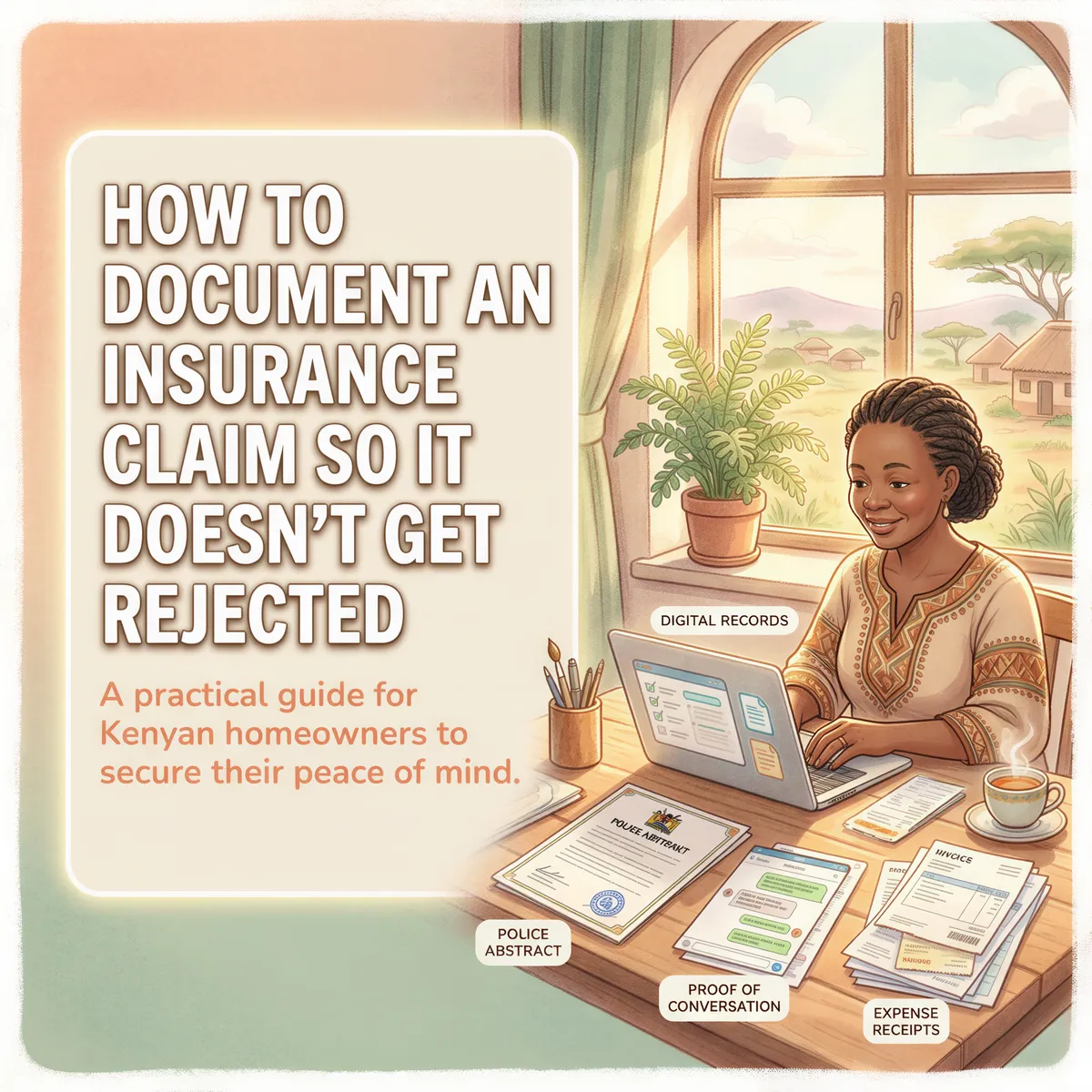
Your car got hit. Or your house was broken into. Or you were admitted to hospital for a week.
You file a claim. You wait. Then you get a message: "Claim rejected — insufficient documentation."
Heartbreaking? Yes. Avoidable? Also yes.
Most insurance claims in Kenya don't get rejected because of bad policies. They get rejected because of bad paperwork. Missing receipts. Late submissions. Unclear photos.
Here's how to document your claim properly — so it actually gets paid.
Table of Contents
- Why Documentation Matters More Than You Think
- The Essential Documents for Any Insurance Claim
- How to Organize Your Documentation
- Common Documentation Mistakes That Kill Claims
- Step-by-Step: Filing a Documented Claim
- Digital Tools That Help
- What to Do If Your Claim Gets Rejected
Why Documentation Matters More Than You Think
Insurance companies don't just take your word for it. They need proof.
Proof that the incident happened. Proof of what was lost or damaged. Proof of how much it was worth.
Without that proof, your claim is just a story. And stories don't pay bills.
The rule is simple: If you can't prove it, you can't claim it.

The Essential Documents for Any Insurance Claim
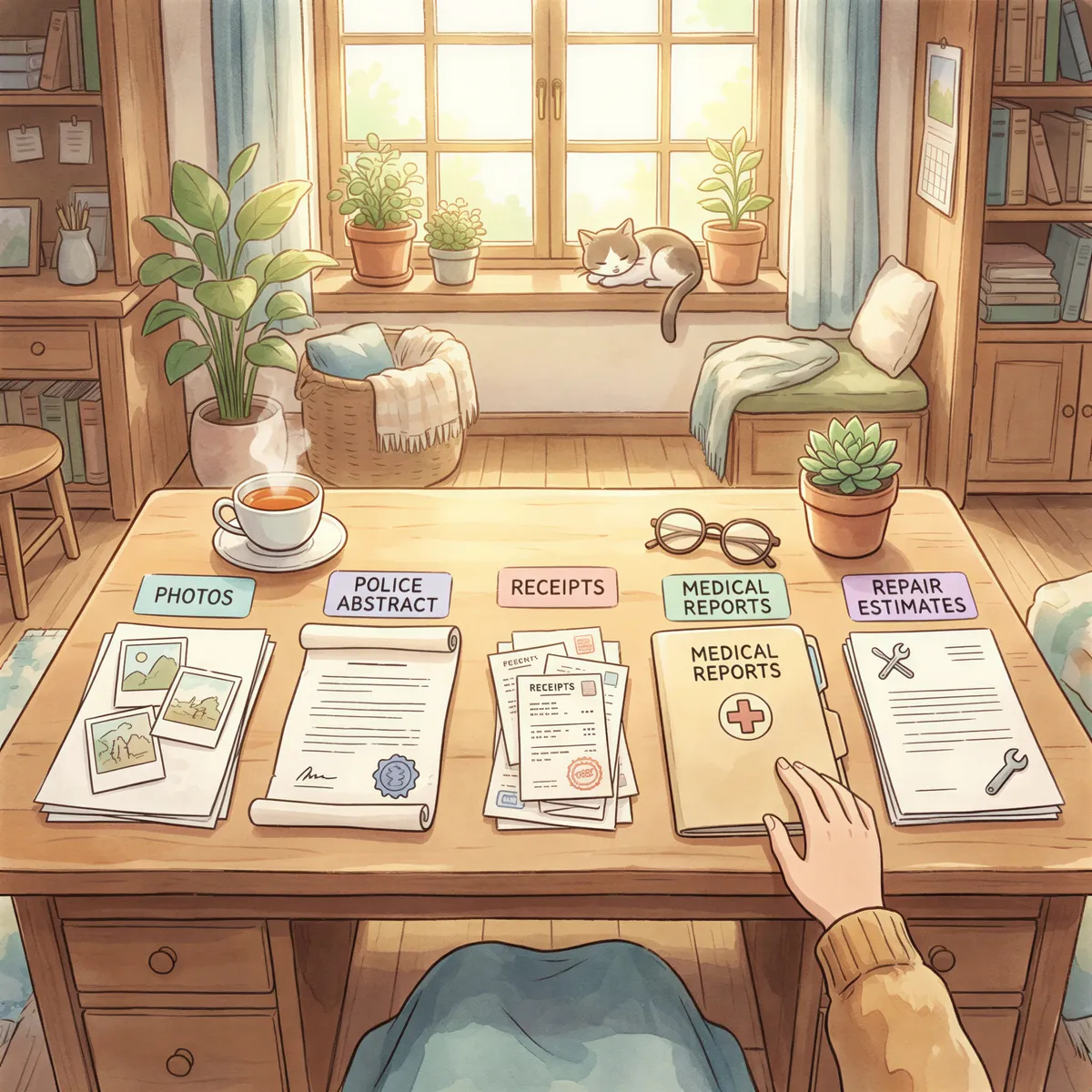
Regardless of the type of claim, you'll almost always need these:
1. Photos and Videos
Take them immediately. Before you clean up. Before you move anything.
- ✔️ Wide shots showing the full scene
- ✔️ Close-ups of specific damage
- ✔️ Multiple angles of the same item
- ✔️ Timestamp your photos (most phones do this automatically)
- ✔️ Video walkthroughs for property damage
Common mistake: Cleaning up or repairing before taking photos. Once you fix it, there's no evidence.
2. Police Abstract (OB Number)
For theft, accidents, vandalism, or any criminal incident — you need a police abstract.
Go to the nearest police station and report the incident. Get an OB number (Occurrence Book number). Then request a police abstract — this is the official report.
👉 Do this within 24 hours of the incident. Delays raise red flags with insurers.
3. Receipts and Proof of Ownership
You need to prove you owned the item and what it was worth.
- Purchase receipts (original or digital)
- M-Pesa payment confirmations
- Bank statements showing the purchase
- Warranty cards
- Photos of items before the incident
Pro tip: Keep a folder on your phone with photos of valuables — electronics, jewellery, appliances. If they're ever stolen or damaged, you have instant proof.
4. Medical Reports (for Health Claims)
If you're filing a health insurance claim:
- Doctor's report with diagnosis
- Admission and discharge summaries
- Itemized hospital bill (not just the total)
- Prescription records
- Lab test results
Ask the hospital for an itemized bill. Insurers often reject lump-sum bills because they can't verify individual charges.
5. Repair Estimates or Invoices
For motor or property claims, get a written estimate from a certified assessor or repair shop.
- At least two quotes (some insurers require this)
- Detailed breakdown of costs
- Photos of the damage alongside the estimate
How to Organize Your Documentation
Don't just dump everything in a WhatsApp chat with yourself. Be systematic.
Create a claim folder — physical or digital — with these sections:
- Incident summary — Date, time, location, what happened (one page)
- Photos/videos — Labeled and dated
- Official reports — Police abstract, fire report, medical report
- Financial proof — Receipts, bank statements, M-Pesa records
- Estimates — Repair quotes, replacement costs
- Communication — Emails or messages with your insurer, agent or broker
Keep copies of everything. If you submit originals, make sure you have digital backups.
Common Documentation Mistakes That Kill Claims
Here's where most people slip up:
❌ Filing too late — Most policies have a reporting window (24-72 hours for incidents, 30 days for claims). Miss it and you're out.
❌ Incomplete forms — Leaving fields blank or writing "see attached" without actually attaching anything.
❌ Inconsistent stories — Your police report says one thing, your claim form says another. Instant red flag.
❌ No proof of value — Claiming KSh 50,000 for a stolen phone but no receipt, no box, no M-Pesa record.
❌ Blurry or useless photos — One dark photo from far away doesn't prove anything.
❌ Not following up — Submitting and hoping for the best. Follow up weekly.
Step-by-Step: Filing a Documented Claim
Here's your checklist:
Within 24 hours of the incident:
- ✔️ Take photos and videos
- ✔️ File a police report (if applicable)
- ✔️ Notify your insurer, agent or broker
- ✔️ Get medical attention (if health-related)
Within 48-72 hours:
- ✔️ Fill out the claim form completely
- ✔️ Gather all receipts and proof of ownership
- ✔️ Get repair estimates or medical reports
- ✔️ Organize everything in your claim folder
Within 7-14 days:
- ✔️ Submit the complete claim package
- ✔️ Keep a record of when and how you submitted
- ✔️ Start following up
Every week after submission:
- ✔️ Call or email for a status update
- ✔️ Document every response
- ✔️ Provide any additional documents requested immediately
For a full walkthrough of the claims process, check out our claims process guide.

Digital Tools That Help
You don't need fancy software. Just use what's on your phone:
- Phone camera — For photos and video (make sure location and timestamp are on)
- Google Drive or iCloud — Back up all claim documents
- M-Pesa statements — Download from the Safaricom app as proof of payments
- ** Email** — Send yourself copies of everything (creates a timestamp)
- Notes app — Write down the incident details while they're fresh
What to Do If Your Claim Gets Rejected
Don't pan...
Ready to Get Started?
Get personalized advice and quotes tailored to your needs. No pressure, just honest guidance.
👉 Or start a chat with our assistant now.