Dental and Optical Insurance in Kenya: Is It Worth Adding to Your Medical Cover?
You just got your medical insurance renewal notice. Everything looks fine. Then you see it:
"Dental and Optical Rider: KSh 15,000/year."
And now you're wondering... is this actually worth it? Or are you better off just paying for your dentist visits and new glasses out of pocket?
Let's break it down. No fluff. Just the real numbers and the real trade-offs.
Table of Contents
- What Dental and Optical Riders Actually Are
- What Does a Dental Rider Typically Cover?
- What Does an Optical Rider Typically Cover?
- The Real Cost: Rider vs. Paying Cash
- When the Rider Is Worth It
- When You Should Just Pay Cash
- How to Compare Dental and Optical Plans
- The Smart Approach
- Final Word
What Dental and Optical Riders Actually Are
Most medical insurance plans in Kenya don't include dental and optical cover as standard. They're sold as add-ons (also called riders).
That means you pay extra -- on top of your base medical premium -- to get coverage for:
- Dental: Cleanings, fillings, extractions, root canals, X-rays
- Optical: Eye exams, prescription glasses, contact lenses, sometimes laser consultations
Some insurers bundle them together. Others sell them separately. The limits, exclusions, and pricing vary wildly.

What Does a Dental Rider Typically Cover?
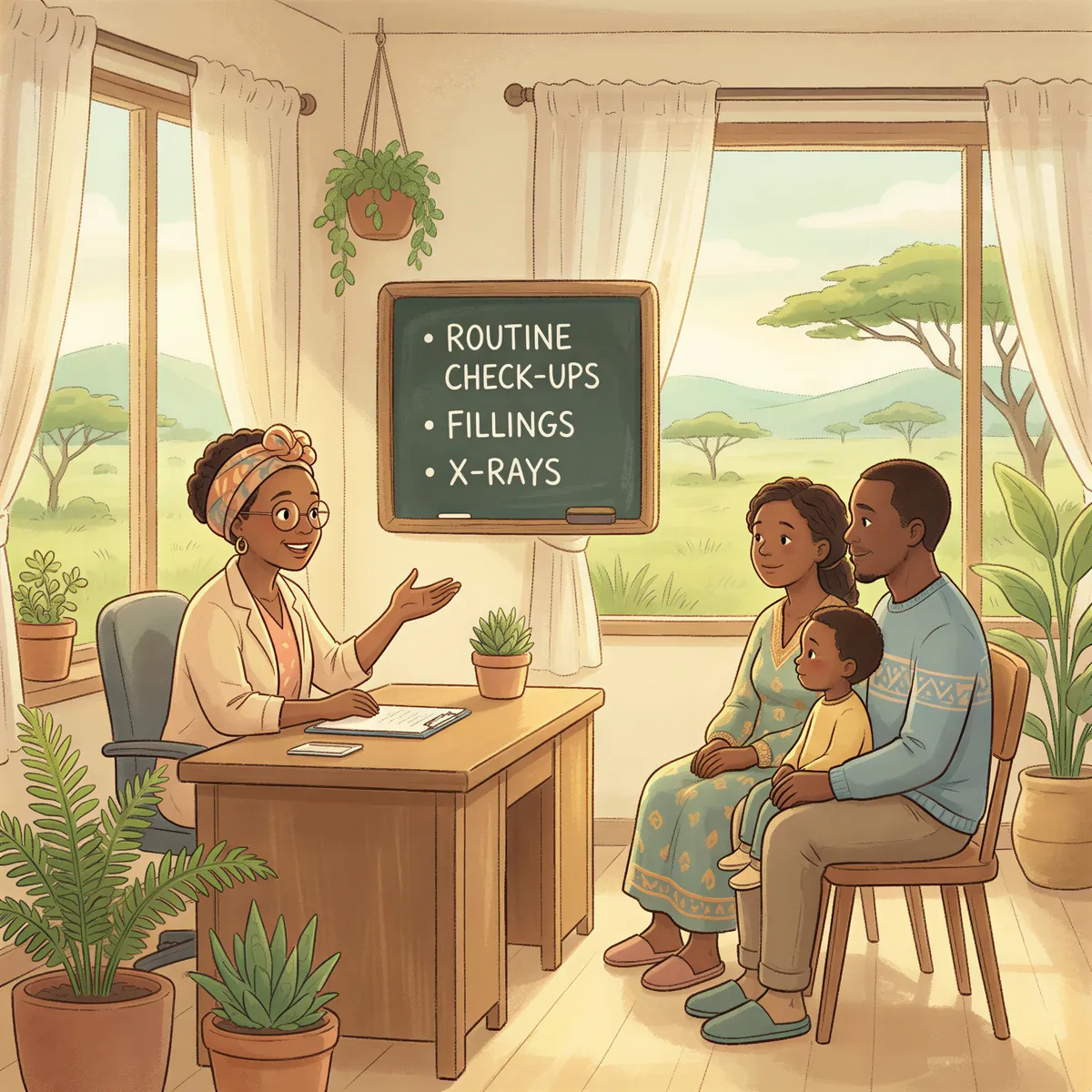
Here's what you'll usually find in a Kenyan dental rider:
✔️ Routine check-ups and cleanings (1-2 per year) ✔️ Fillings and extractions ✔️ X-rays and diagnostics ✔️ Root canal treatment (sometimes with sub-limits) ✔️ Gum treatment
What's usually excluded:
❌ Cosmetic dentistry (whitening, veneers) ❌ Orthodontics (braces) -- unless you pay for a premium plan ❌ Implants (almost always excluded or heavily sub-limited) ❌ Pre-existing dental conditions in the first year
Key insight: Most dental riders in Kenya have annual limits between KSh 20,000 and KSh 50,000. That sounds decent until you realize a single root canal can cost KSh 15,000-25,000.
What Does an Optical Rider Typically Cover?
Optical riders are usually simpler:
✔️ Annual eye exam ✔️ Prescription glasses (frames + lenses) -- usually up to a set limit ✔️ Contact lenses (sometimes as an alternative to glasses, not both)
What's usually excluded:
❌ Designer frames above the limit ❌ Laser eye surgery (LASIK) ❌ Sunglasses (even prescription ones, depending on the insurer)
Key insight: Most optical riders cap frames + lenses at KSh 10,000-20,000. A decent pair of prescription glasses in Nairobi costs KSh 5,000-15,000. So the math gets interesting.
The Real Cost: Rider vs. Paying Cash
Let's do the math that actually matters.
Scenario 1: You're generally healthy
- You visit the dentist once a year for a cleaning: ~KSh 3,000
- You get new glasses every 2 years: ~KSh 8,000 (so KSh 4,000/year average)
- Total annual spend: ~KSh 7,000
If the rider costs KSh 12,000-18,000/year, you're losing money.
Scenario 2: You have dental issues
- Two fillings this year: ~KSh 8,000
- Root canal: ~KSh 20,000
- Cleaning: ~KSh 3,000
- Total: ~KSh 31,000
Now that KSh 15,000 rider with a KSh 30,000 limit looks like a great deal.
Scenario 3: Family cover
- Your kids need braces (if covered): KSh 80,000-150,000
- Multiple family members needing glasses: KSh 20,000+
For families, the rider often makes more financial sense.
When the Rider Is Worth It
👉 You have a family with kids who need dental work or glasses
👉 You have ongoing dental issues -- cavities, gum disease, needed procedures
👉 Your employer is paying for it (free is always worth it)
👉 The rider limit is significantly higher than the premium
When You Should Just Pay Cash
👉 You have healthy teeth and good eyesight
👉 The rider costs more than what you'd spend out of pocket
👉 The limits are so low they barely cover one procedure
👉 You're already stretched on your medical premium
Real talk: If you're paying KSh 15,000/year for a dental rider and you only use KSh 5,000 worth of dental care, you're basically donating KSh 10,000 to the insurance company. Every year.

How to Compare Dental and Optical Plans
Not all riders are created equal. Here's what to compare:
| Factor | What to Look For |
|---|---|
| Annual limit | Higher is better. Below KSh 20,000 dental is tight |
| Waiting period | Some have 30-90 day waiting periods |
| Sub-limits | Check if root canals, crowns have separate caps |
| Network | Which dentists and opticians are on the panel? |
| Family vs. individual limits | Is the limit shared or per member? |
When comparing plans, your agent or broker can use tools like BimaSasa to see which insurers include dental and optical as standard versus those that charge extra.

The Smart Approach
Here's what I tell my clients:
-
Check if your employer plan already includes it. Many corporate plans bundle dental and optical. Don't buy what you already have.
-
Do the math for YOUR situation. Not your neighbour's. Not what some blog told you. YOUR teeth, YOUR eyes, YOUR family.
-
Ask about standalone dental plans. Some insurers offer dental-only cover that's cheaper than adding a rider to medical.
-
Negotiate at renewal. If you didn't use your dental/optical benefit last year, ask your insurer to lower the premium or increase the limit.
For a deeper dive into dental and optical plans, check out our dental and optical insurance guide. And if you're still choosing your base medical cover, start with our medical insurance guide.
Final Word
Dental and optical riders aren't a scam. But they're not automatic wins either.
The insurance industry loves selling you add-ons because most people don't do the math. They just tick the box and hope for the best.
Don't be that person.
Do the math. Look at your actual usage. Then decide.
💡 Ready to see what health insurance costs in Kenya? Try our free calculator — get instant quotes from Kenya's major medical insurers in seconds.
🟢 Need help figuring out if a dental or optical rider makes sense for your plan? Talk to us at Keryl Insurance -- we'll run the numbers with you. No pressure, no sales pitch. Just honest advice.
Ready to Get Started?
Get personalized advice and quotes tailored to your needs. No pressure, just honest guidance.
👉 Or start a chat with our assistant now.