Comprehensive vs Third Party Car Insurance: Real KSh Costs
You just bought a car. Maybe it's your first. Maybe you finally upgraded from a mat-three commute.
Either way, someone has already told you: "You need insurance."
And now you're stuck on the question every Kenyan car owner faces:
"Do I go comprehensive or third party?"
It sounds like a simple choice. It's not.
One option costs KSh 5,000-8,000. The other costs KSh 40,000-100,000+. And the difference in what they actually cover? Massive.
Let's break it down with real numbers. No fluff. No insurance jargon.
Table of Contents
- What Is Third Party Car Insurance?
- What Is Comprehensive Car Insurance?
- The Real KSh Cost Comparison
- The Deductible Factor (Excess)
- When Third Party Makes Sense
- When Comprehensive Is Worth Every Shilling
- Common Mistakes Kenyans Make
- How to Choose: A Simple Framework
- Getting Your Motor Vehicle Insurance Right
- Final Word: Don't Gamble With Your Biggest Asset
What Is Third Party Car Insurance?
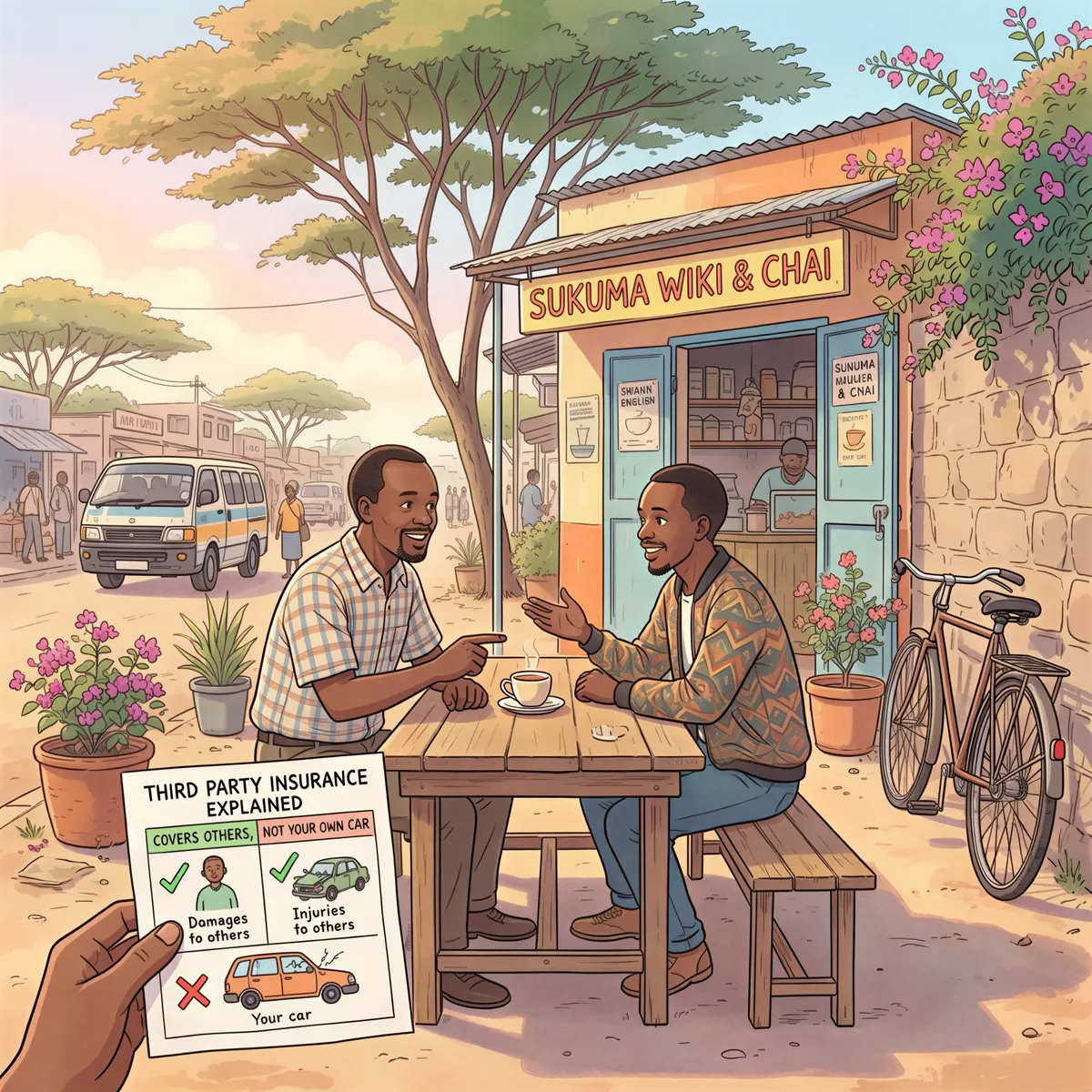
Third party is the legal minimum in Kenya. If you drive without it, you're breaking the law under the Insurance (Motor Vehicle Third Party Risks) Act.
Here's what it covers:
- ✔️ Damage you cause to other people's property (their car, their fence, their duka)
- ✔️ Injury or death you cause to other people
- ❌ Nothing on your car
- ❌ Nothing if your car is stolen
- ❌ Nothing if a tree falls on your car
Third party insurance protects everyone else from you. It does not protect you.
Think of it this way: if you hit a Prado while driving your Vitz, third party covers the Prado. Your Vitz? That's your problem.
What Is Comprehensive Car Insurance?
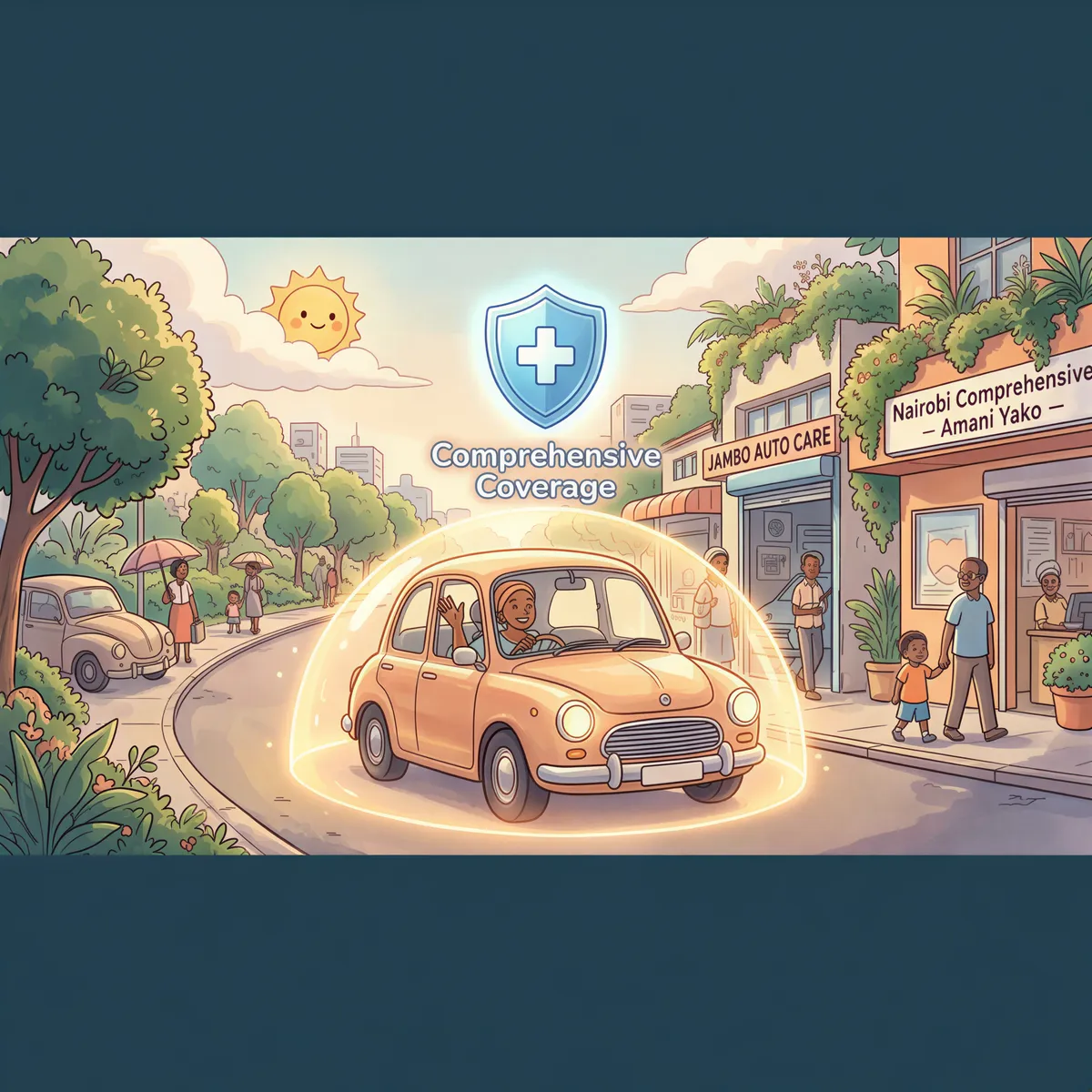
Comprehensive does everything third party does — plus it covers your own vehicle.
Here's what you get:
- ✔️ Everything in third party (damage/injury to others)
- ✔️ Damage to your car from accidents
- ✔️ Theft of your vehicle
- ✔️ Fire damage
- ✔️ Windscreen and glass damage (usually)
- ✔️ Third party, fire, and theft combined
Some policies also include:
- Towing and rescue
- Courtesy car while yours is in the garage
- Political violence and riots cover
- Personal accident cover for the driver
Comprehensive protects you and everyone else.
The Real KSh Cost Comparison
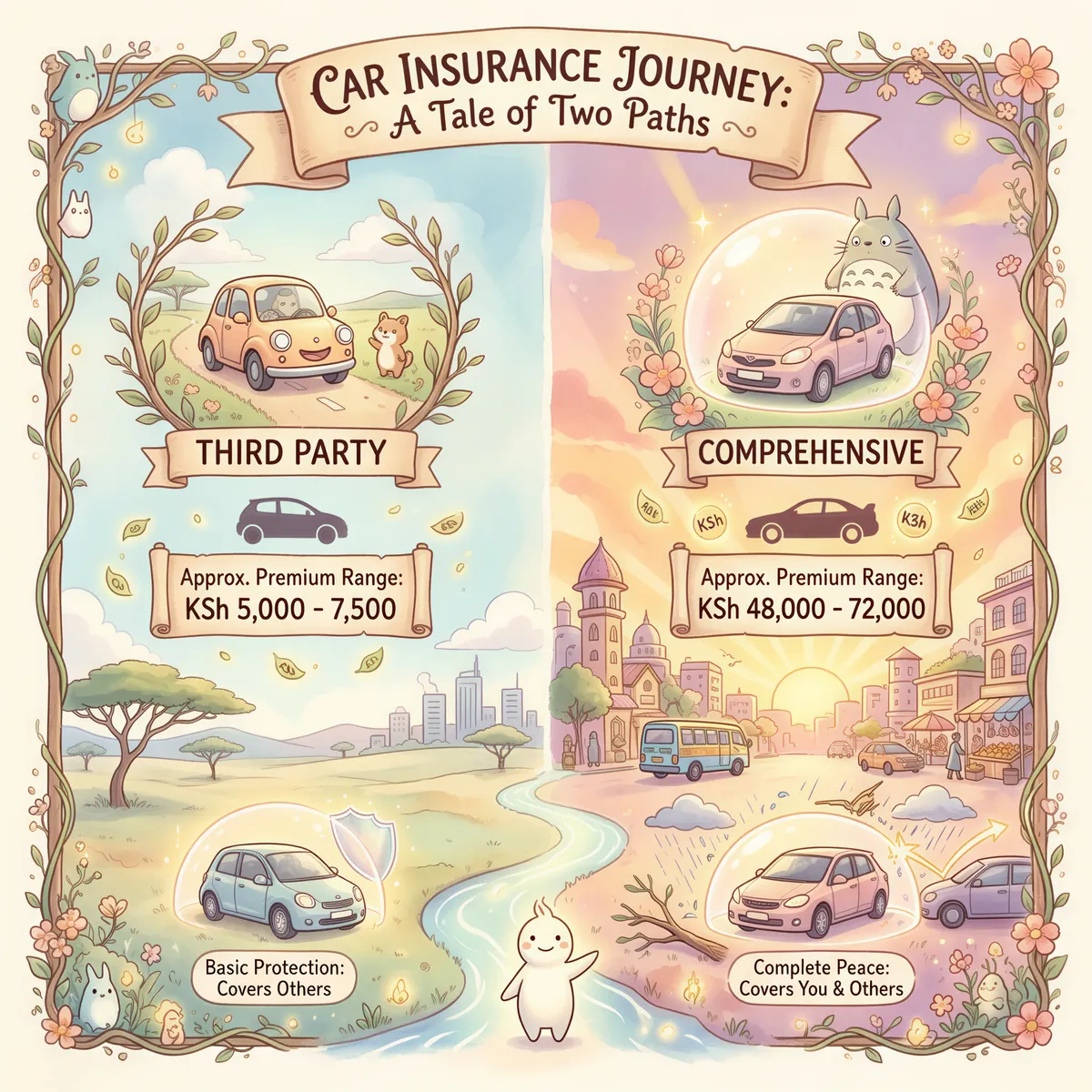
Let's use a real example. Say you own a Toyota Axio valued at KSh 1,200,000.
| Third Party | Comprehensive | |
|---|---|---|
| Annual premium | KSh 5,000-7,500 | KSh 48,000-72,000 |
| Covers other people's damage | ✔️ | ✔️ |
| Covers your car (accident) | ❌ | ✔️ |
| Covers theft | ❌ | ✔️ |
| Covers fire | ❌ | ✔️ |
| Windscreen/glass | ❌ | ✔️ (usually) |
| Towing | ❌ | ✔️ (some policies) |
Comprehensive premiums typically run 4-6% of your car's value per year. Third party is a flat rate set by regulation.
The gap is obvious. But so is the protection difference.
The Deductible Factor (Excess)
Here's where people get surprised.
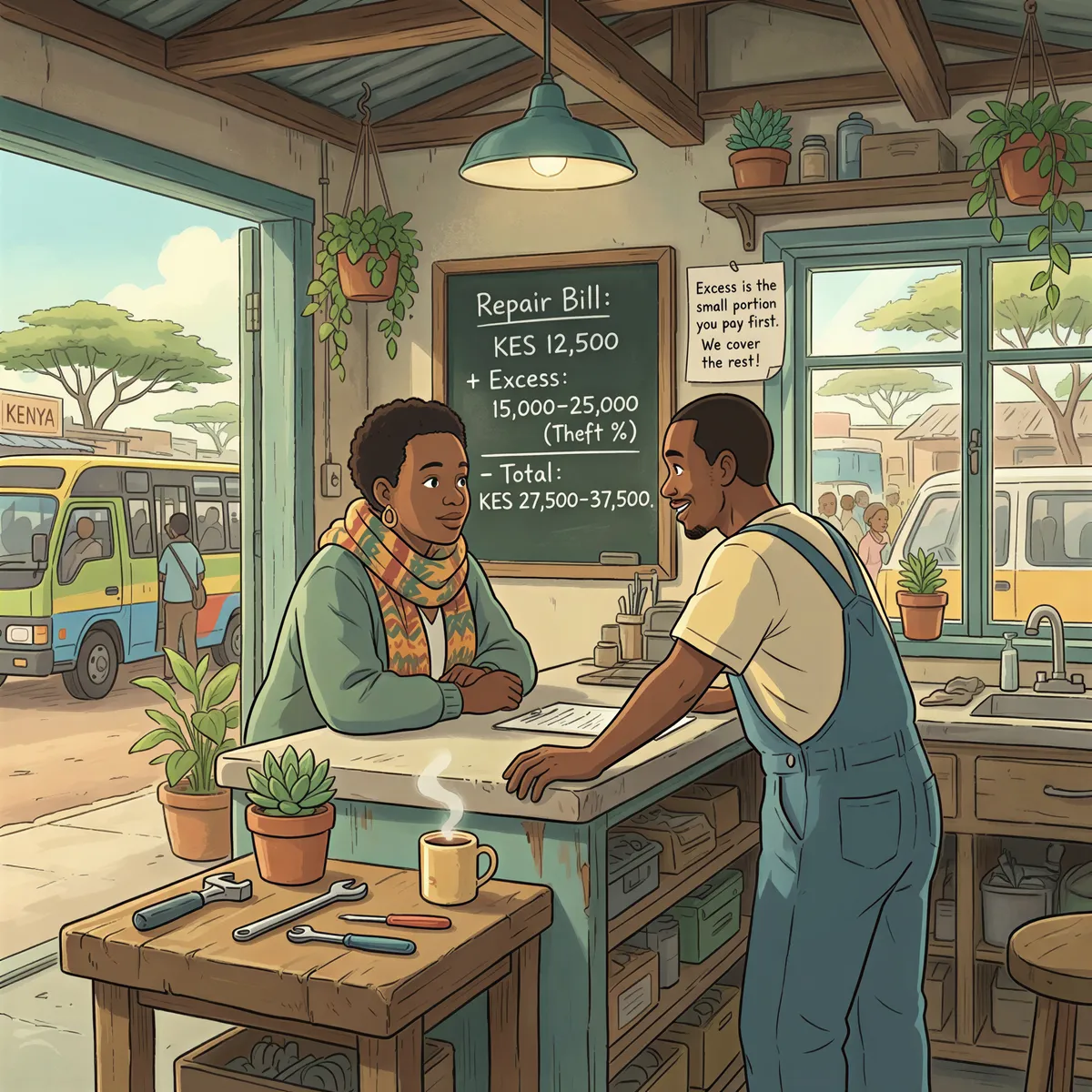
Even with comprehensive cover, you pay a deductible (excess) every time you make a claim. This is the portion you handle before the insurer pays the rest.
Typical excess amounts:
- Accident damage: KSh 15,000-25,000
- Theft: 5-10% of car value (so KSh 60,000-120,000 on a KSh 1.2M car)
- Young driver excess: Additional KSh 10,000-20,000 if the driver is under 25
This matters. If your repair costs KSh 20,000 and your excess is KSh 15,000, you're only getting KSh 5,000 from the insurer. Sometimes it's not even worth claiming for small dents.
For a deeper breakdown on how deductibles work, check out our insurance deductibles guide.
When Third Party Makes Sense
Third party isn't always the "cheap and risky" option. Sometimes it's the smart one.
Third party works if:
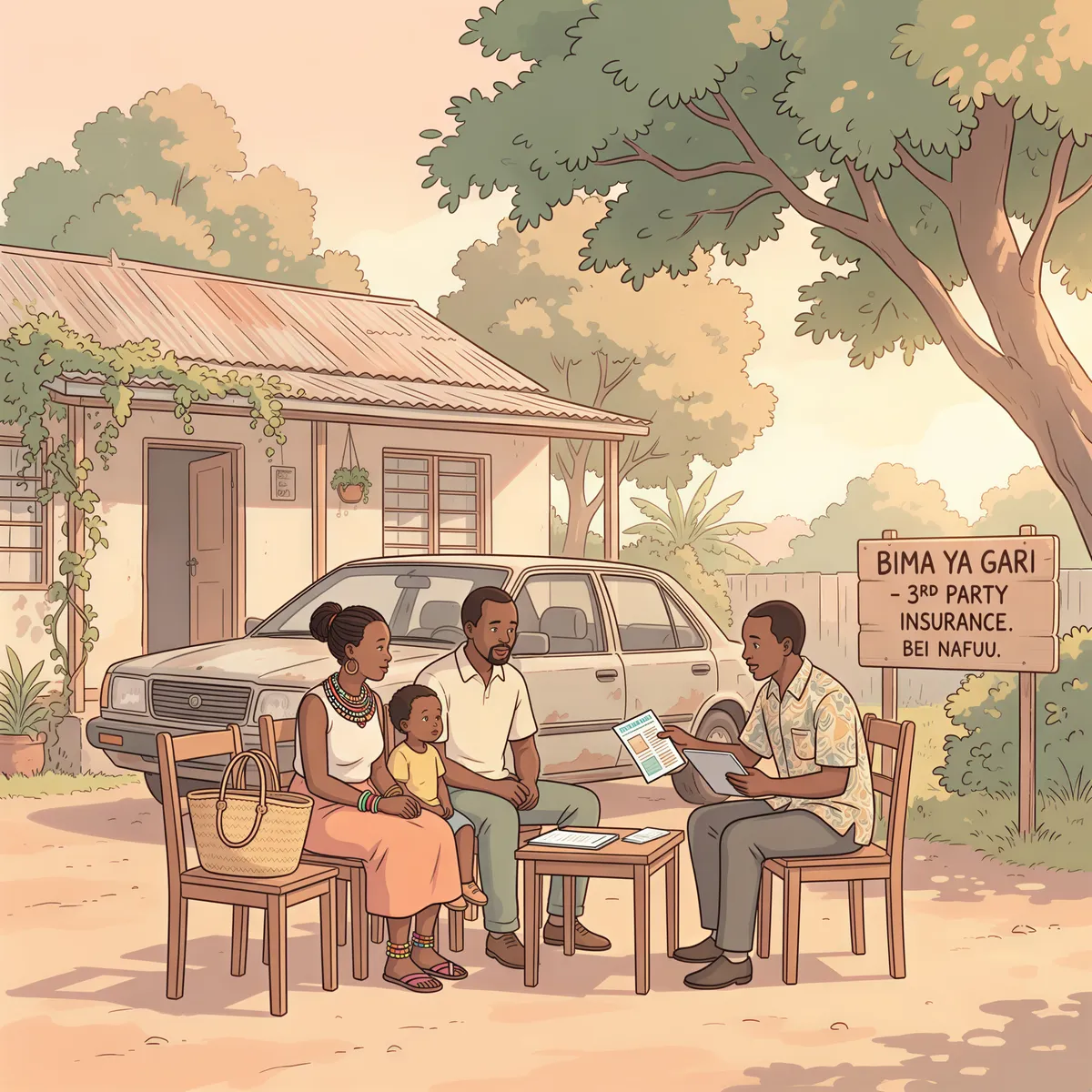
- Your car is worth under KSh 400,000 — the comprehensive premium plus excess might cost more than the car is worth
- You have an older vehicle you can afford to replace
- You're a careful driver with off-street parking and solid security
- You can self-insure small repairs without financial stress
Real talk: If your car is worth KSh 250,000, paying KSh 15,000 for comprehensive cover — plus KSh 15,000 excess on every claim — doesn't add up. Third party at KSh 5,000 makes more sense.
When Comprehensive Is Worth Every Shilling
Comprehensive is the move when:
- Your car is worth KSh 800,000+ — theft or a write-off would seriously hurt
- You have a car loan — the bank will require comprehensive anyway
- You park in high-risk areas or commute on busy highways
- You can't afford to replace your car out of pocket
- You're a new driver (statistically higher accident risk)
If losing your car would set you back financially by 6+ months, comprehensive isn't a luxury. It's a necessity.
Common Mistakes Kenyans Make
1. Choosing third party just because it's cheap
Yes, it saves you money today. But one accident — one matatu sideswipe, one carjacking — and you're out the full value of your car.
2. Not reading the comprehensive policy exclusions
Comprehensive doesn't mean "covers everything." Check what's excluded. Common exclusions:
- Driving under the influence
- Unlicensed drivers
- Using your private car for commercial purposes (ride-hailing without endorsement)
- Pre-existing mechanical damage
3. Over-insuring or under-insuring
If your car's market value is KSh 1M but you insure it for KSh 1.5M, you're overpaying on premiums. If you insure it for KSh 600,000, you'll only get KSh 600,000 if it's stolen — not its real value.
4. Ignoring the excess amount
A low premium with a high excess can be worse than a slightly higher premium with a reasonable excess. Always check both numbers.
How to Choose: A Simple Framework
Ask yourself three questions:
-
What is my car worth? If under KSh 400,000, lean third party. If over KSh 800,000, lean comprehensive.
-
Can I afford to lose it? If no, get comprehensive. Period.
-
What's my risk profile? New driver? Nairobi traffic? No garage? Highway commute? Higher risk = stronger case for comprehensive.
For cars in the KSh 400,000-800,000 range, it's a judgment call. Consider Third Party, Fire, and Theft (TPFT) as a middle option — it covers theft and fire but not accident damage to your car. Some insurers offer it at 2-3% of the car's value.
Getting Your Motor Vehicle Insurance Right
Whatever you choose, the key is understanding exactly what you're paying for. Not what you assume. Not what someone told you at the car wash.
Read the policy document. Ask about exclusions. Check the excess.
Start by exploring the different motor vehicle insurance options available in Kenya to find the right fit for your car and budget.
Final Word: Don't Gamble With Your Biggest Asset
For most Kenyans, a car is their first or second most expensive asset.
Third party keeps you legal. Comprehensive keeps you protected.
The right choice depends on your car, your finances, and your risk tolerance. There is no universal answer — but there is always a wrong one: driving around with no idea what your policy actually covers.
Know your cover. Know your excess. Know your limits.
🟢 What This Means for You
If your car is worth more than you can comfortably replace, comprehensive insurance isn't optional — it's financial common sense.
If your car is older and low-value, third party keeps you legal while you save for your next upgrade.
Either way, compare policies carefully. The cheapest premium isn't always the best deal.
Ready to Get Started?
Get personalized advice and quotes tailored to your needs. No pressure, just honest guidance.
👉 Or start a chat with our assistant now.