Maternity Insurance Kenya: Buy Before You Start Trying
Here's something nobody tells you when you start thinking about having a baby in Kenya:
If you buy maternity insurance today, you probably can't use it for another 12 months.
That's not a typo. Most insurers in Kenya enforce a waiting period of 10 to 12 months before maternity benefits kick in. Some go up to 24 months.
Which means if you're already pregnant when you buy the policy — you're paying for nothing.
The time to get maternity insurance is before you start trying. Not after the test comes back positive.
Table of Contents
- What Does Maternity Insurance Actually Cover?
- Inpatient vs Outpatient Maternity — What's the Difference?
- The Waiting Period Problem
- How Much Does It Cost?
- Choosing the Right Maternity Plan
- NHIF / SHA and Maternity
- When to Buy: A Timeline
- Common Mistakes to Avoid
- The Final Word
What Does Maternity Insurance Actually Cover?
Maternity cover in Kenya typically falls under your health insurance plan. It's either included or added as a rider (an add-on to your base policy).
Here's what it usually covers:
Pre-natal care (Outpatient)
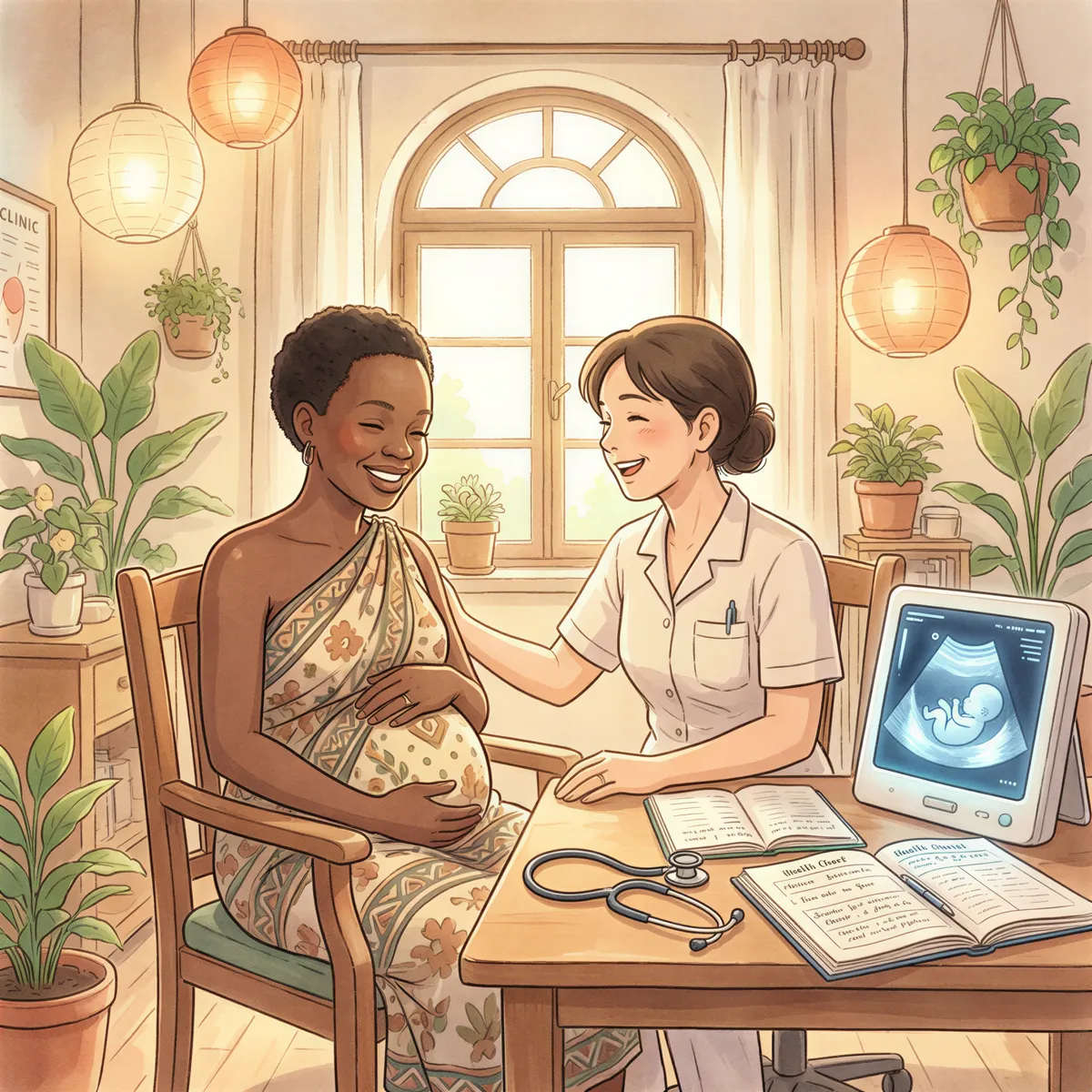
- Doctor consultations during pregnancy
- Ultrasound scans
- Blood tests and lab work
- Routine check-ups
Delivery (Inpatient)
- Normal delivery
- Caesarean section (C-section)
- Complications during delivery
- Hospital stay for mother and baby
Post-natal care
- Follow-up visits after delivery
- Newborn check-ups (usually first 30 days)
- Vaccinations (some plans)
Important: Not all plans cover C-sections at the same limit as normal delivery. Some cap C-section cover lower. Always check.
Inpatient vs Outpatient Maternity — What's the Difference?
This trips a lot of people up.
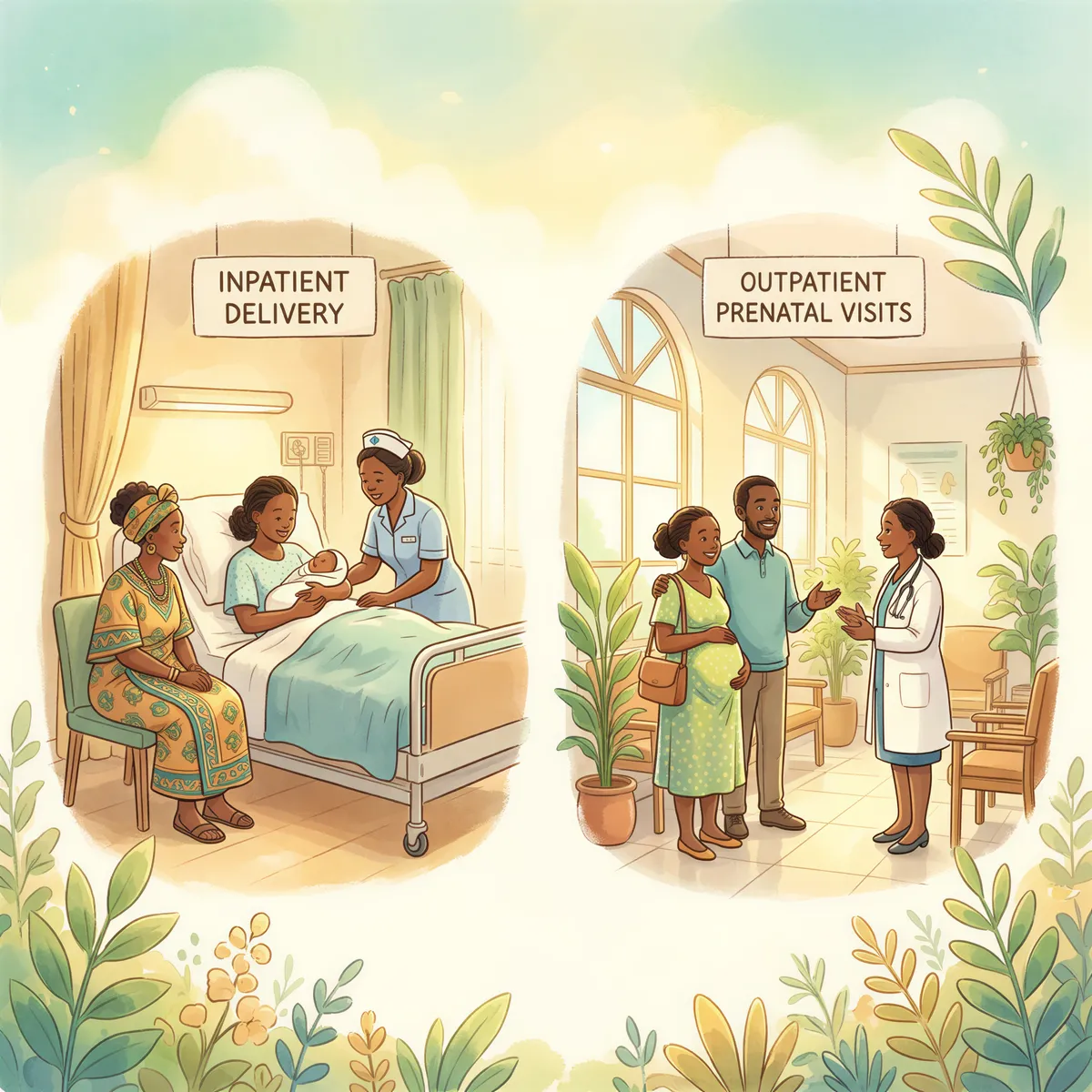
Inpatient maternity covers the delivery itself — the hospital admission, delivery room, surgeon fees, anaesthesia, hospital bed, and newborn care during the stay.
Outpatient maternity covers everything before and after — the clinic visits, scans, blood tests, and check-ups.
Some plans only cover inpatient maternity. That means your delivery is covered, but you're paying for all the clinic visits out of pocket.
The best plans cover both. But they cost more.
| Cover Type | What's Included | Typical Limit |
|---|---|---|
| Inpatient only | Delivery + hospital stay | KSh 100,000 – 300,000 |
| Outpatient only | Prenatal visits + scans | KSh 30,000 – 80,000 |
| Both (comprehensive) | Everything above | KSh 150,000 – 500,000 |
For a deeper breakdown, check our guide on inpatient vs outpatient cover.
The Waiting Period Problem
This is the single biggest thing to understand about maternity insurance in Kenya.
Most policies have a 12-month waiting period for maternity benefits.
That means:
- You buy the policy in January 2026
- You can start using maternity benefits in January 2027
- If you conceive in March 2026, your delivery around December 2026 is not covered
Some insurers offer shorter waiting periods (6 months) at higher premiums. A few corporate schemes have no waiting period at all.
👉 Bottom line: Buy your maternity cover at least one year before you plan to conceive. If you're even thinking about it, start now.

How Much Does It Cost?
Maternity insurance in Kenya varies widely depending on the insurer, cover limits, and hospital tier.
Individual plans:
- Basic maternity cover: KSh 40,000 – 80,000/year
- Mid-range with both inpatient and outpatient: KSh 80,000 – 150,000/year
- Premium (private hospitals): KSh 150,000 – 300,000/year
What drives the cost up:
- Higher delivery limits (especially C-section)
- Private hospital access (Nairobi Hospital, Aga Khan, MP Shah)
- Shorter waiting periods
- Newborn cover included from birth
What you'll pay out of pocket without insurance:
- Normal delivery at a public hospital: KSh 15,000 – 30,000
- Normal delivery at a private hospital: KSh 80,000 – 200,000
- C-section at a private hospital: KSh 200,000 – 500,000
The maths is clear. One C-section at a private hospital can cost more than two years of premiums.
Choosing the Right Maternity Plan
Here's what to compare when shopping:
- ✔️ Waiting period — 6 months vs 12 months vs none
- ✔️ Delivery limit — Does it cover C-section at the same level?
- ✔️ Hospital panel — Are the hospitals you want on the list?
- ✔️ Outpatient maternity — Included or separate?
- ✔️ Newborn cover — Is your baby covered from birth or do you add them later?
- ✔️ Pre-existing conditions — Declared or excluded?
- ✔️ Annual premium — Can you afford it alongside your other expenses?
Your agent or broker can use BimaSasa to quickly compare maternity limits and waiting periods across insurers — it saves hours of back-and-forth with multiple companies.
Ask your agent or broker: "What's the all-in cost for a plan that covers prenatal, delivery, C-section, and the baby's first 30 days at [hospital name]?"

NHIF / SHA and Maternity
The Social Health Authority (SHA) — which replaced NHIF — provides some maternity cover for registered members.
What SHA typically covers:
- Normal delivery at contracted facilities
- Some prenatal visits
- Limited C-section cover
What SHA doesn't cover well:
- Private hospital deliveries
- High-limit C-section costs
- Comprehensive prenatal care at private clinics
Most families use SHA as a base and top up with private insurance for better hospital access and higher limits.
When to Buy: A Timeline
Here's the ideal timeline for maternity insurance planning:
12-18 months before trying:
- Research plans and compare options
- Buy the policy and start the waiting period
- Budget for premiums
During the waiting period:
- Use your outpatient benefits (if available) for general health
- Keep paying premiums — don't let the policy lapse
Once you conceive:
- Notify your insurer (some require this)
- Start using prenatal outpatient benefits
- Confirm your hospital is on the panel
Delivery:
- Pre-authorize with your insurer before admission
- Keep all documents — admission letter, discharge summary, receipts
After delivery:
- Add your baby to the policy
- Use postnatal benefits
- Start planning for the next renewal
For comprehensive guidance, read our maternity insurance guide.
Common Mistakes to Avoid
❌ Buying after you're already pregnant — The waiting period means you won't be covered.
❌ Assuming C-section is fully covered — Many plans cap it lower than normal delivery. Read the limits.
❌ Not checking the hospital panel — Your dream hospital might not be on the list.
❌ Letting the policy lapse — If you stop paying during the waiting period, the clock resets.
❌ Ignoring newborn cover — Some plans don't automatically cover the baby. You might need to add them separately.
The Final Word
Having a baby in Kenya is beautiful. It's also expensive.
Maternity insurance isn't a luxury — it's a planning tool. The earlier you buy it, the more options you have. And the less financial stress you carry into one of life's biggest moments.
Don't wait for the pregnancy test. Start planning now.
💡 Ready to see what health insurance costs in Kenya? Try our free calculator — get instant quotes from Kenya's major medical insurers in seconds.
🟢 Thinking about starting a family? Explore maternity insurance options and compare plans before the waiting period catches you off guard. The best time to buy maternity cover was a year ago. The second best time is today.
Ready to Get Started?
Get personalized advice and quotes tailored to your needs. No pressure, just honest guidance.
👉 Or start a chat with our assistant now.