ECCIF Kenya Explained: What the Fund Actually Covers
There are illnesses Kenyans don’t like to talk about openly.
Cancer. Dialysis. ICU admissions. Long-term chronic disease.
Not because we don’t care — but because the costs are terrifying.
This is why the Emergency, Chronic & Critical Illness Fund (ECCIF) exists under the Social Health Authority. It was created to answer one big fear:
“What happens to ordinary Kenyans when treatment costs run into hundreds of thousands — or millions?”
ECCIF is an important step. But it is not a miracle.
This article explains what ECCIF can do, where it stops, and how to protect yourself realistically under the new system.
Table of Contents
- What Is ECCIF?
- Why ECCIF Was Created
- What ECCIF Is Meant to Cover
- Where ECCIF Works Best
- The Hard Truth: Where ECCIF Reaches Its Limits
- Realistic Scenarios (What ECCIF Can — and Can’t — Do)
- The Most Dangerous Assumption Kenyans Make About ECCIF
- The Smart Kenyan Strategy for ECCIF
- Who Should Pay Extra Attention to ECCIF
- Final Word: ECCIF Is a Shield — Not Armour
What Is ECCIF?
The Emergency, Chronic & Critical Illness Fund (ECCIF) is one of the three funds under Social Health Authority (SHA).
Its role is to support high-cost, high-impact healthcare needs that go beyond routine outpatient care.
In simple terms:
ECCIF exists to reduce catastrophic medical costs — not eliminate them entirely.

Why ECCIF Was Created
Before SHA, catastrophic illness often meant:
- Total financial collapse
- Selling land
- Endless harambees
- Families drowning in debt
ECCIF was designed to:
- Pool risk nationally
- Reduce out-of-pocket spending
- Give public hospitals a way to handle expensive care
It is a solid policy idea — but policy ideas still operate within real-world constraints.
What ECCIF Is Meant to Cover
ECCIF focuses on serious medical events, mainly within public and designated facilities.
✔️ Emergency care
- Life-threatening injuries
- Acute medical emergencies
- Stabilisation and urgent treatment
✔️ Chronic illness support
- Conditions requiring long-term management
- Ongoing treatment within approved facilities
✔️ Critical illness care
- Cancer treatment
- Dialysis
- ICU and HDU care (within limits)
ECCIF steps in where costs escalate beyond routine care.
Where ECCIF Works Best
ECCIF is most effective when:
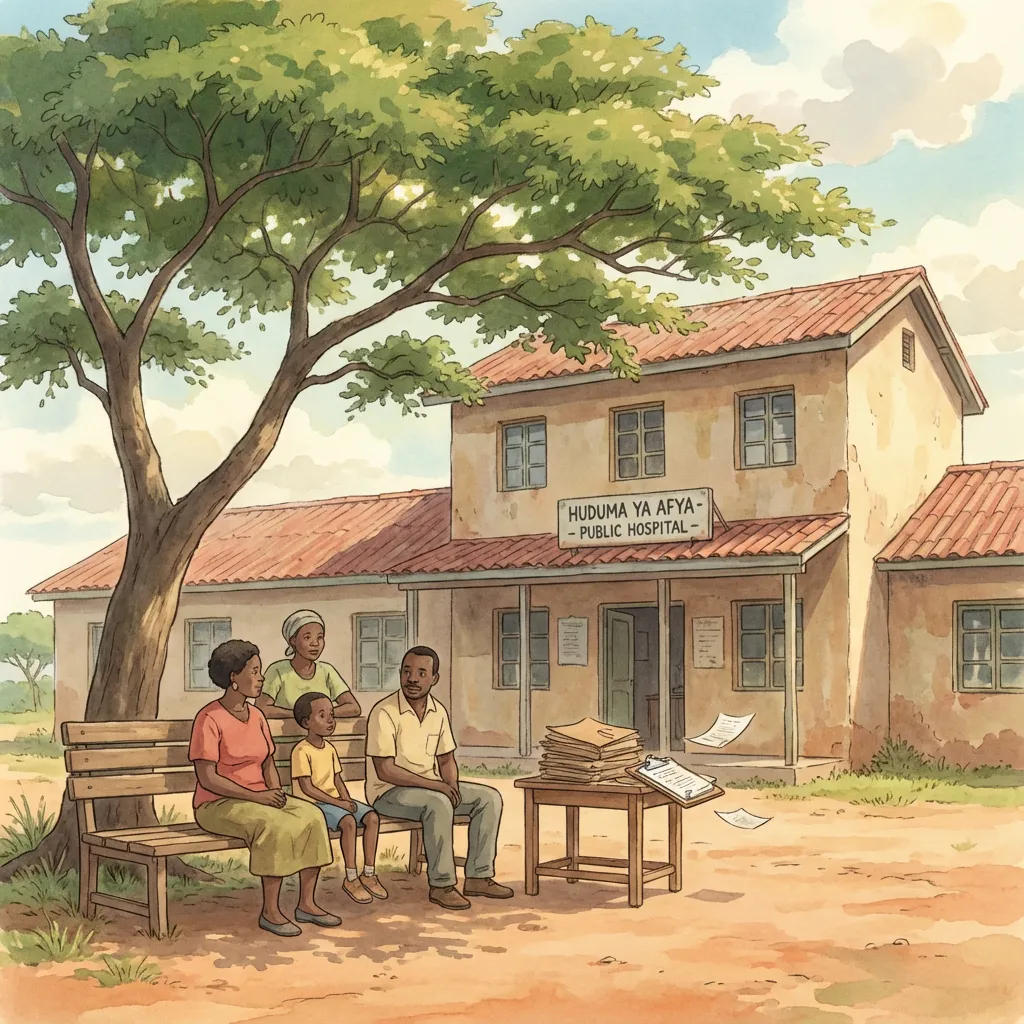
- Care is provided in public referral hospitals
- Treatment protocols are standardised
- Demand is manageable
In these environments, ECCIF can significantly reduce how much a family pays out of pocket.
The Hard Truth: Where ECCIF Reaches Its Limits
This is where expectations must be realistic.
ECCIF does not automatically give you:
- Private oncology centres
- Immediate specialist access
- Unlimited dialysis sessions
- Guaranteed ICU beds
- Short waiting times
Why?
Because ECCIF:
- Relies heavily on public health infrastructure
- Must serve millions of people
- Is constrained by capacity, staffing, and funding
The fund spreads risk — it does not remove scarcity.
Realistic Scenarios (What ECCIF Can — and Can’t — Do)
Scenario 1: Cancer Diagnosis
- ECCIF can support treatment in public oncology units
- It can reduce the cost burden significantly
But:
- Waiting times can be long
- Drug availability may vary
- Choice of facility is limited
Scenario 2: Dialysis
- ECCIF helps cover dialysis in public centres
- This can save families from complete financial collapse
But:
- Slots are limited
- Frequency may be constrained
- Travel and waiting are common
Scenario 3: ICU Admission
- ECCIF supports ICU care in public hospitals
But:
- ICU beds are scarce
- Transfers may be delayed
- Private ICU access is not guaranteed
ECCIF helps — but it does not guarantee speed or choice.
The Most Dangerous Assumption Kenyans Make About ECCIF
The biggest risk is believing:
“If something serious happens, SHA will handle everything.”
That assumption leads people to:
- Skip private cover
- Ignore top-ups
- Delay planning
And when reality hits, the shock is brutal.
ECCIF reduces suffering — it does not eliminate it.
The Smart Kenyan Strategy for ECCIF
ECCIF should be viewed as relief, not rescue.
Here’s the strategy that protects families best:
1. Let ECCIF handle what it’s built for
- Public hospital treatment
- High-cost care within the system
- Financial relief during catastrophic illness
2. Use private insurance to protect speed and choice
Private cover provides:
- Faster admissions
- Access to private oncology and dialysis centres
- Better continuity of care
- Higher limits for ICU and surgery
3. Accept that serious illness needs layers
No single fund — public or private — can carry catastrophic illness alone.
Protection comes from stacking, not choosing sides.

Who Should Pay Extra Attention to ECCIF
- Families with history of cancer or chronic disease
- Middle-income earners (most exposed to gaps)
- People supporting elderly parents
- Anyone assuming SHA alone is enough
Final Word: ECCIF Is a Shield — Not Armour
ECCIF is one of the most important improvements in Kenya’s health system.
But it is not a blank cheque. It is not instant access. It is not private medicine.
It is shared protection — designed to soften the blow, not erase it.
Kenyans who understand this early:
- Plan better
- Panic less
- Protect their families more effectively
And that understanding makes all the difference.
🟢 What This Means for You
If your plan stops at ECCIF, you are partially protected.
If you combine ECCIF with the right private cover, you are properly prepared.
💡 Ready to see what health insurance costs in Kenya? Try our free calculator — get instant quotes from Kenya's major medical insurers in seconds.
Ready to Get Started?
Get personalized advice and quotes tailored to your needs. No pressure, just honest guidance.
👉 Or start a chat with our assistant now.