Car Insurance Claim in Kenya: How to File and Get Paid
You've just been in an accident. Your heart is racing. Your bumper is hanging off. The other driver is yelling. There's a crowd forming.
And somewhere in the back of your mind, you're thinking: "I pay insurance for this. They'll handle it... right?"
Well, they will. If you do the right things. In the right order. Without making the mistakes that delay or kill claims every single day in Kenya.
Let me walk you through exactly what to do -- step by step -- so that when you file your car insurance claim, you actually get paid.
Table of Contents
- Step 1: At the Accident Scene
- Step 2: Report to the Police
- Step 3: Notify Your Insurance Company
- Step 4: Vehicle Assessment
- Step 5: Repair Authorization and Execution
- Step 6: Getting Paid (or Getting Your Car Back)
- Common Mistakes That Delay or Kill Claims
- How Long Does the Whole Process Take?
- Final Word
Step 1: At the Accident Scene
The first 30 minutes after an accident determine everything. Here's what to do:
Stay calm and stay safe.
- Move to the side of the road if possible
- Turn on your hazard lights
- Check if anyone is injured -- if yes, call 999 or 112 immediately
Do NOT admit fault. Even if you think it was your mistake. Say nothing about who caused what. Be polite. Exchange details. That's it.
Collect evidence. Now.
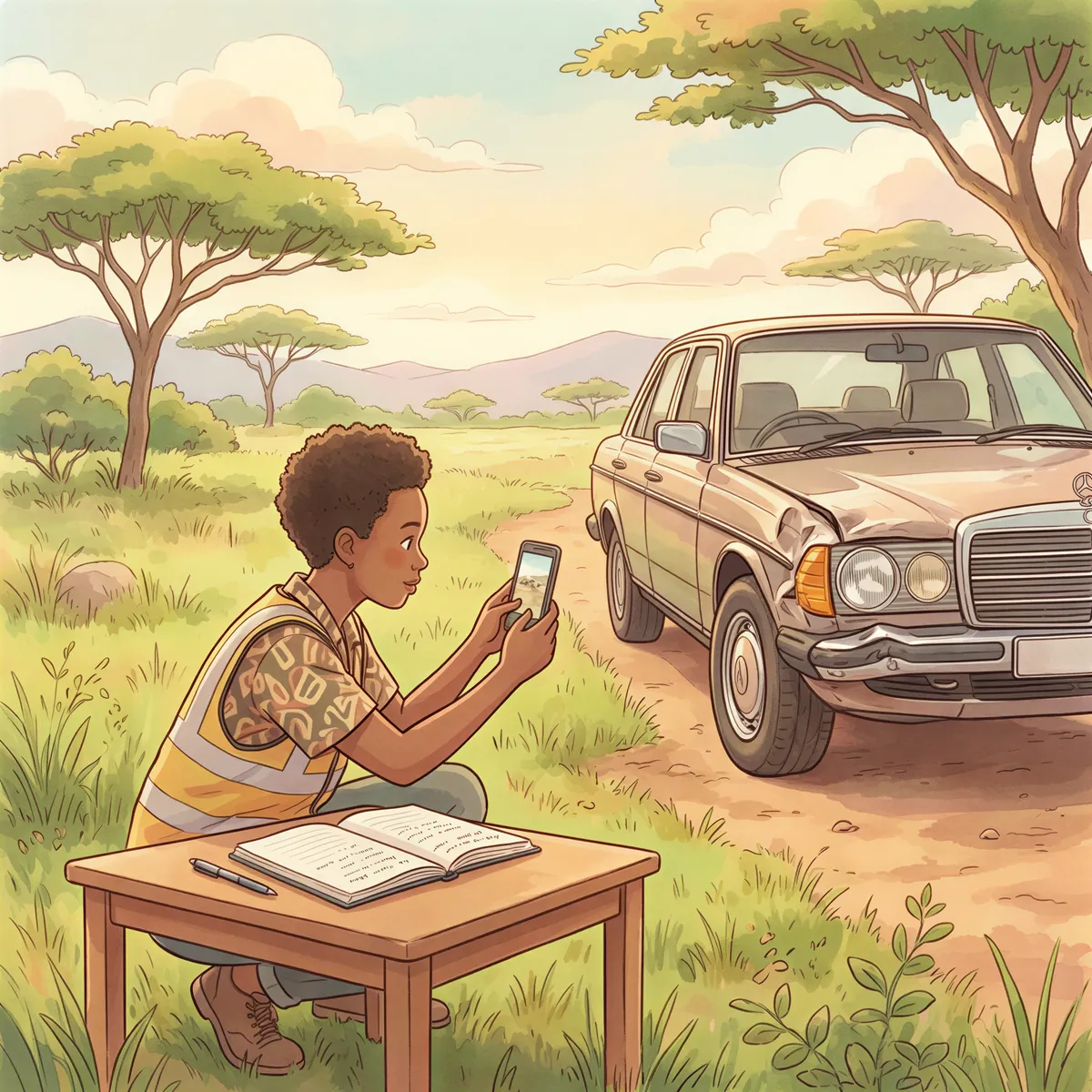
✔️ Take photos of ALL vehicles involved -- damage, number plates, positions on the road ✔️ Take photos of the road -- traffic signs, markings, road conditions ✔️ Get the other driver's name, phone number, and insurance details ✔️ Get names and phone numbers of at least 2 witnesses ✔️ Note the time, date, and exact location
Key insight: Photos are your best friend. Take 20 too many rather than 1 too few. Insurers love evidence. Claims adjusters love evidence. Courts love evidence. Take. The. Photos.
Step 2: Report to the Police
In Kenya, you must report any road accident to the police. This isn't optional.
Go to the nearest police station within 24 hours and file an accident report. You'll need:
- Your driving licence
- Vehicle registration document (logbook copy)
- Your account of what happened
The police will give you an OB number (Occurrence Book number). Write this down. Guard it with your life. You'll need it for everything that follows.
Then apply for a police abstract. This is the official police report of the accident. It typically takes 7-14 days to be ready, sometimes longer.
Pro tip: Follow up on your police abstract. Don't just file and forget. Go back. Ask. Be politely persistent. Delayed abstracts are one of the biggest reasons claims stall in Kenya.

Step 3: Notify Your Insurance Company
Call your insurer, agent or broker within 24-48 hours. Most policies require prompt notification. Waiting too long can give the insurer grounds to deny your claim.
When you call, have ready:
- Your policy number
- OB number from the police
- Photos from the scene
- The other driver's details
- A brief description of what happened
Your insurer will:
- Open a claim file
- Give you a claim number
- Tell you where to take your car for assessment
- Explain next steps
Real talk: Many Kenyans skip this step and go straight to the garage. Bad idea. Your insurer needs to authorize everything before work starts. Taking your car to a random garage and sending the bill later is a recipe for a denied claim.

Step 4: Vehicle Assessment
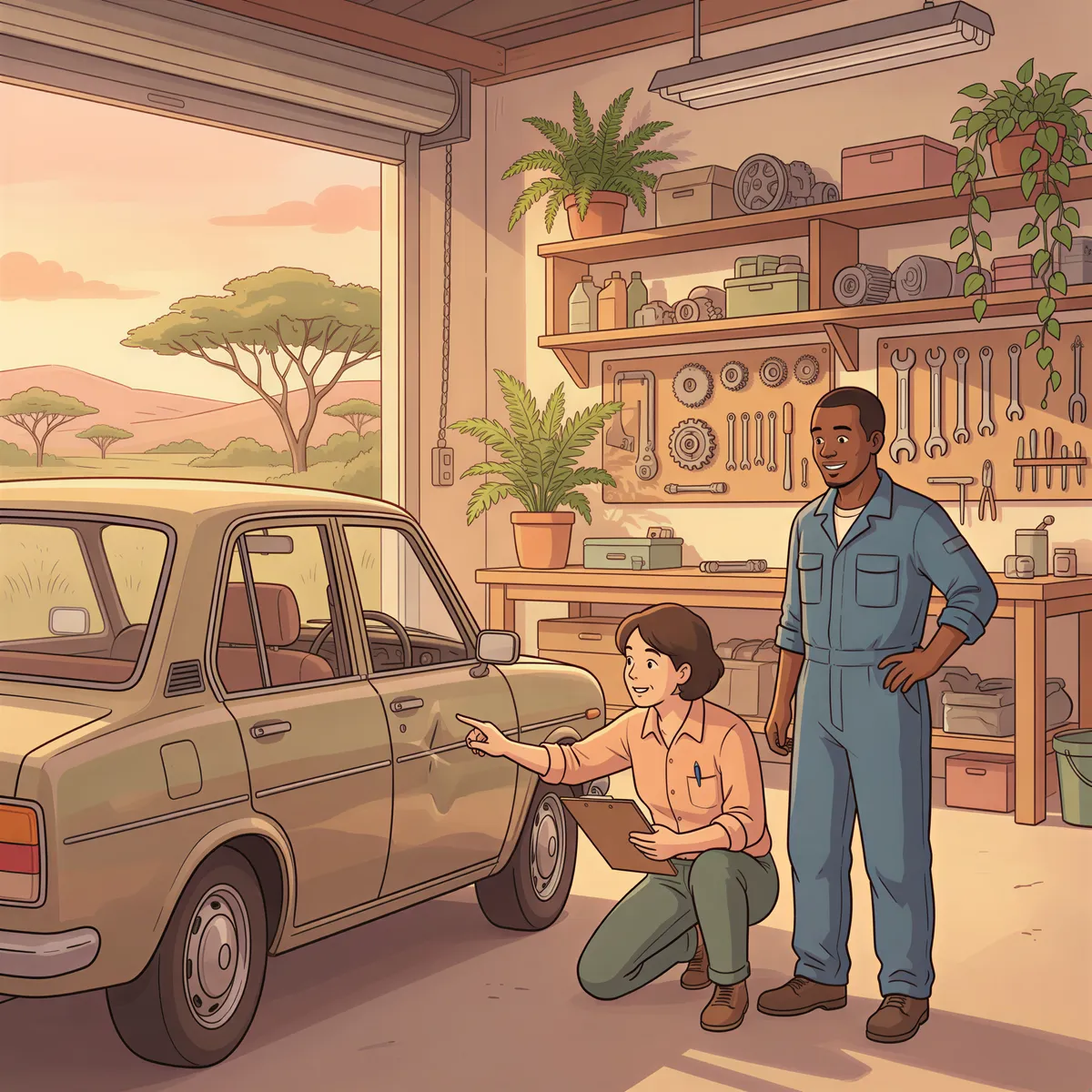
The insurer will send an assessor (also called a loss adjuster) to inspect your vehicle. This usually happens at an authorized garage or assessment centre.
The assessor will:
- Examine the damage
- Compare it to your accident report and photos
- Estimate the repair cost
- Check if the damage is consistent with your account
What to expect:
- Assessment can take 1-5 business days depending on the insurer
- The assessor might request additional photos or information
- They may ask you to get repair quotes from specific garages
What NOT to do:
❌ Don't start repairs before assessment ❌ Don't move your car to a different garage without telling your insurer ❌ Don't exaggerate the damage -- assessors are professionals who do this every day
Step 5: Repair Authorization and Execution
Once the assessor approves the repair estimate, the insurer issues a repair authority (also called a letter of authority or LOA).
This is basically the insurer saying: "Yes, repair this car. Here's what we'll pay for."
Important things about repairs:
- Your insurer may have preferred garages. Using them usually speeds things up.
- You have the right to choose your own garage, but the insurer may cap the amount they'll pay based on their assessment.
- Betterment -- if your old, worn parts are being replaced with brand new ones, the insurer might deduct a percentage. This is legal and standard.
Your excess (deductible):
You'll need to pay your excess before repairs start. This is the portion you agreed to cover when you bought the policy. In Kenya, excess amounts typically range from KSh 10,000 to KSh 50,000 depending on your policy and vehicle type.
Step 6: Getting Paid (or Getting Your Car Back)
For comprehensive policies, the insurer typically pays the garage directly. You pay your excess, pick up your car, done.
For total loss claims (your car is written off), the process is different:
- The insurer values your car based on market value at the time of the accident
- They deduct your excess
- They pay you the balance
- You surrender the logbook to the insurer
- The insurer keeps the wreck (salvage)
Warning: "Market value" and "what you think your car is worth" are often very different numbers. Insurers use valuation guides and comparable sales. If you disagree, you have the right to get an independent valuation.

Common Mistakes That Delay or Kill Claims
I've seen hundreds of claims. These mistakes come up again and again:
👉 Late notification. Waiting weeks to tell your insurer. Some policies have 48-hour notification requirements.
👉 No police abstract. Without it, your claim is dead in the water. The insurer needs it.
👉 Poor documentation. No photos, no witness details, no written account. It becomes your word against theirs.
👉 Starting repairs before assessment. The insurer needs to see the damage first. Once it's fixed, they can't verify the claim.
👉 Driving without a valid licence. If you weren't properly licensed at the time of the accident, your comprehensive claim can be denied.
👉 Drunk driving. Alcohol in your system = claim denied. No exceptions.
👉 Using the car for purposes not covered. Using your personal vehicle for commercial transport (like ride-hailing) without proper cover? Claim denied.
👉 Not disclosing modifications. Added a turbo? Changed the suspension? If it wasn't declared to the insurer, it can complicate your claim.
For a complete checklist of what documents you need, see our claims documentation guide.
How Long Does the Whole Process Take?
Let's be realistic:
| Stage | Typical Timeline |
|---|---|
| Police report + OB number | Same day |
| Police abstract | 7-14 days (can be longer) |
| Insurer notification | Within 48 hours |
| Assessment | 1-5 business days |
| Repair authorization | 2-7 business days after assessment |
| Repairs | 5-21 days depending on damage |
| Total | 3-8 weeks for a straightforward claim |
Complex claims, disputes, or total losses can take 2-4 months. Sometimes longer.
For a broader overview of the claims process, check out our claims process guide. And for everything about motor insurance, visit our motor vehicle insurance guide.
Final Word
Filing a car insurance claim in Kenya isn't rocket science. But it does require you to follow the process. Carefully. In order.
The insurers who pay quickly are the same insurers who deny claims quickly. The difference is whether YOU did everything right on your end.
Take the photos. Get the OB number. Notify early. Don't start repairs before assessment. Keep copies of everything.
Do those things, and you'll get paid. Skip them, and you'll join the long list of Kenyans who think "insurance is a scam" -- when really, they just didn't follow the process.
🟢 Need help filing a claim or unsure about your policy? Contact Keryl Insurance -- we'll guide you through every step. Whether it's your first fender bender or a total write-off, we've got your back.
Ready to Get Started?
Get personalized advice and quotes tailored to your needs. No pressure, just honest guidance.
👉 Or start a chat with our assistant now.