Beyond Medical and Funeral: Why Every Kenyan Family Needs Life Insurance
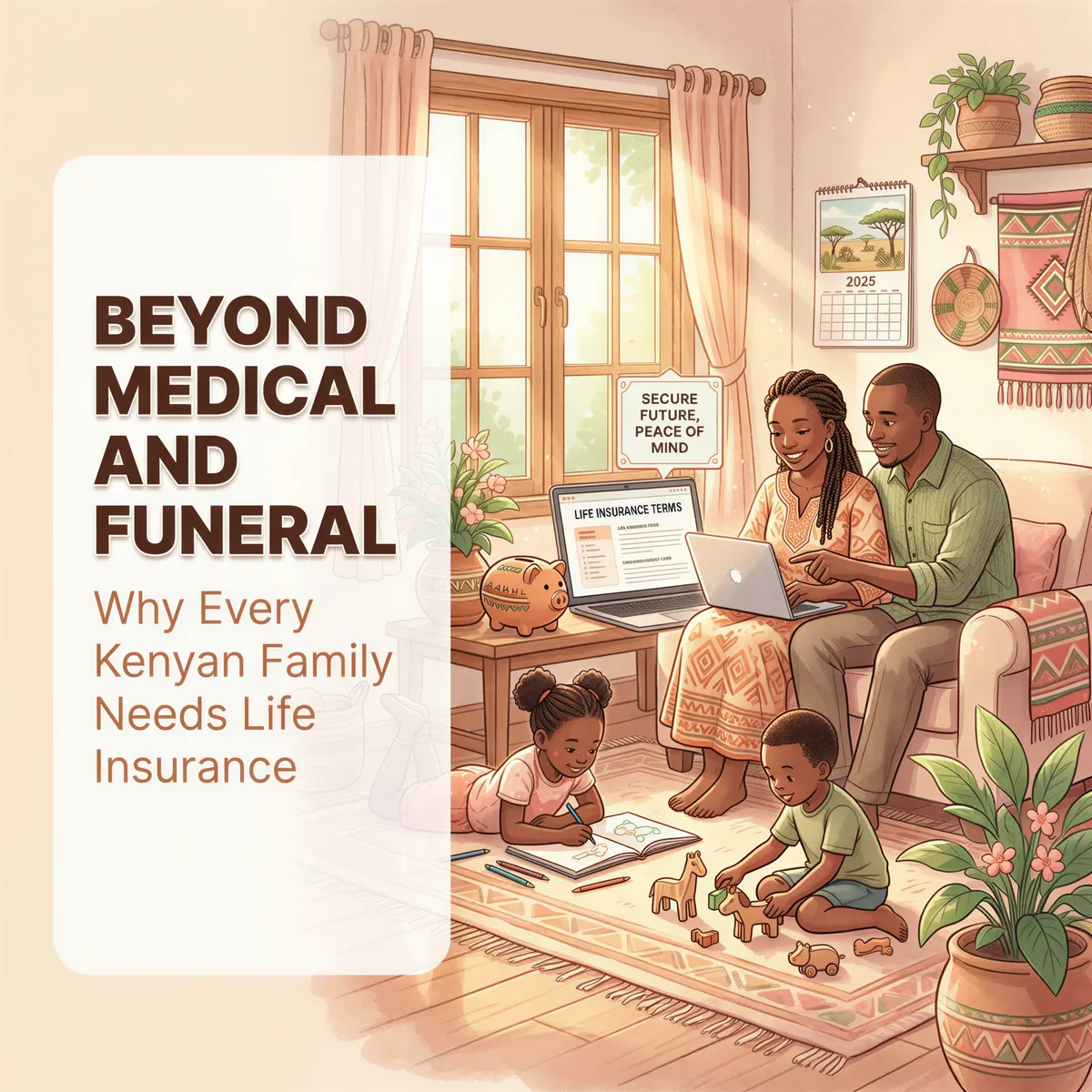
Let me ask you something.
If you dropped dead tomorrow — and I'm sorry to be that blunt — what happens to your family?
Not the funeral. That, Kenyans are weirdly good at figuring out. WhatsApp groups go up. M-Pesa contributions roll in. Someone's aunt brings the tents and chairs.
But what about the month after?
The rent. The school fees. The car loan. The groceries.
That's where things fall apart. And that's exactly why life insurance exists.
Table of Contents
- The Insurance Gap Nobody Talks About
- The Real Cost of Losing a Breadwinner
- Three Things Life Insurance Actually Protects
- "But I Already Have Group Life Cover at Work"
- Term Life vs Whole Life: A Quick Snapshot
- How Much Life Insurance Do You Actually Need?
- Why Kenyans Avoid Life Insurance (And Why They Shouldn't)
- Final Word
The Insurance Gap Nobody Talks About
Here's what most Kenyan families think insurance means:
- Medical cover (for hospital visits)
- Funeral cover (for burial expenses)
- Car insurance (because it's legally required)
And that's it. End of conversation.
But there's a massive gap in the middle.
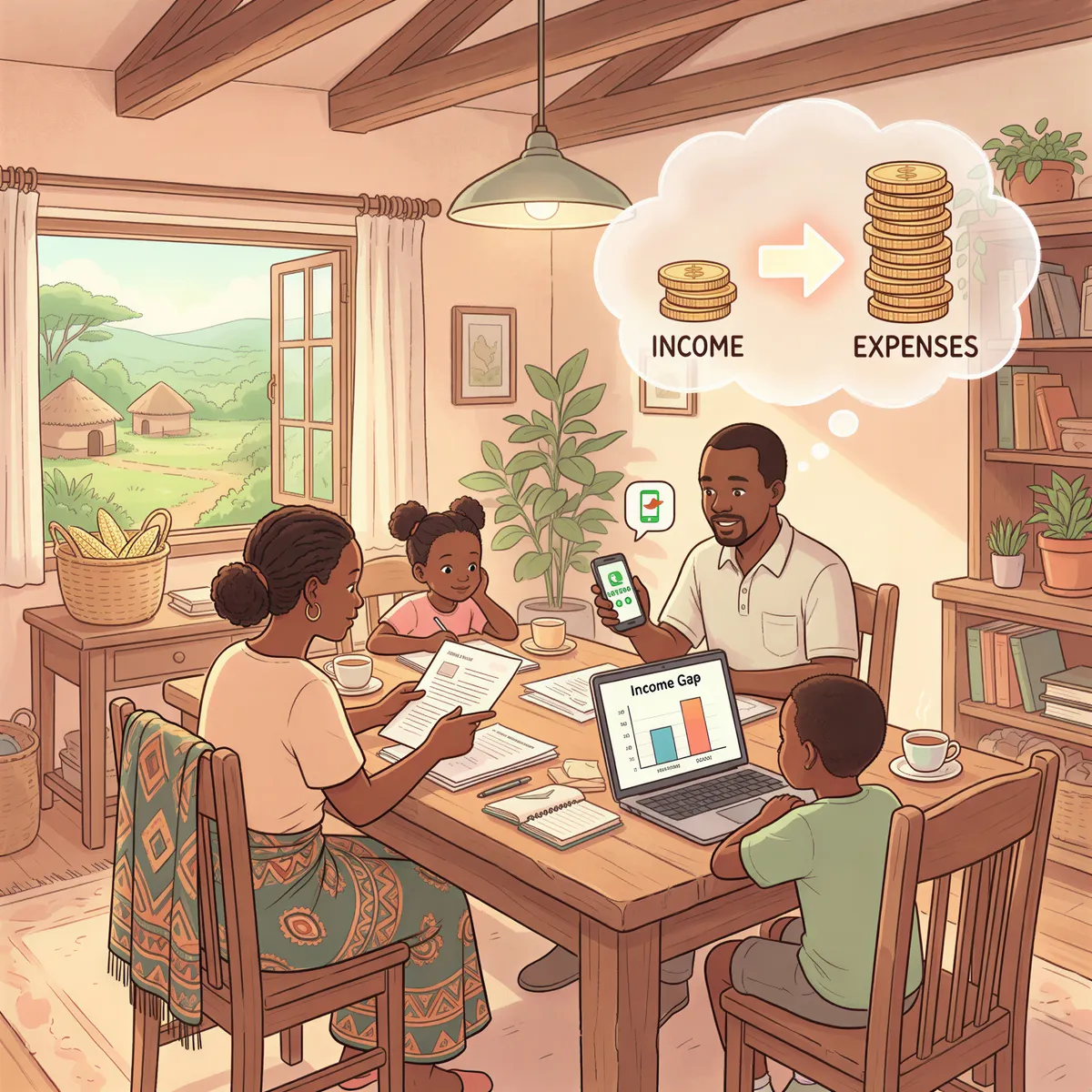
What happens to your family's income when the breadwinner is gone?
Medical insurance doesn't answer that. Funeral cover doesn't answer that. Only life insurance does.
The Real Cost of Losing a Breadwinner
Let's get specific.
Say you earn KSh 80,000 a month. Decent salary. You support your spouse, two kids in private school, and your mum upcountry.
Now imagine that income disappearing overnight.
Your family still needs:
- Rent: KSh 25,000/month
- School fees: KSh 60,000/term (times two kids)
- Food and basics: KSh 15,000/month
- Upcountry support: KSh 5,000/month
That's roughly KSh 960,000 per year just to stay afloat. Not to thrive. Just to survive.
Without life insurance, your family either burns through savings in months or starts relying on relatives who have their own burdens.

Three Things Life Insurance Actually Protects
Life insurance isn't about you. You'll be gone. It's about the people you leave behind.
Here's what it covers:
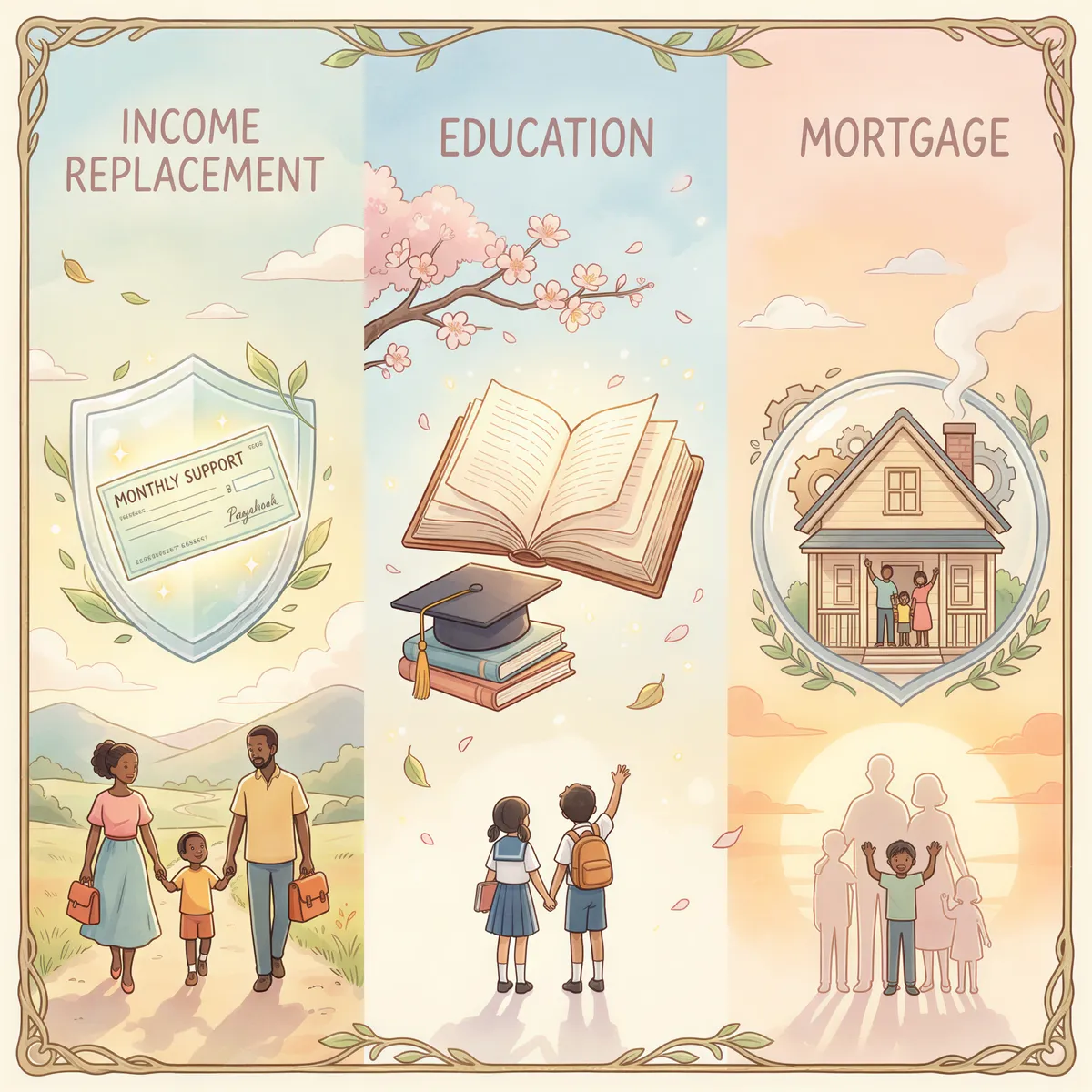
1. Income Replacement
A good term life policy pays your family a lump sum that replaces your income for years. If you earn KSh 80,000/month, a KSh 5 million payout gives your family roughly five years of breathing room.
Five years to adjust. To retrain. To figure out the next chapter.
2. Education Fees
This one hits different in Kenya. School fees don't stop because a parent dies.
If your child is in Class 4 today, they still need to get through high school and hopefully university. That's 10+ years of fees. Life insurance can ring-fence that.
3. Mortgage and Loan Protection
Got a mortgage? A car loan? A business loan?
If you die, the debt doesn't die with you. Your family either pays up or loses the asset. Life insurance clears the debt. Your family keeps the house.
"But I Already Have Group Life Cover at Work"
Good. That's a start.
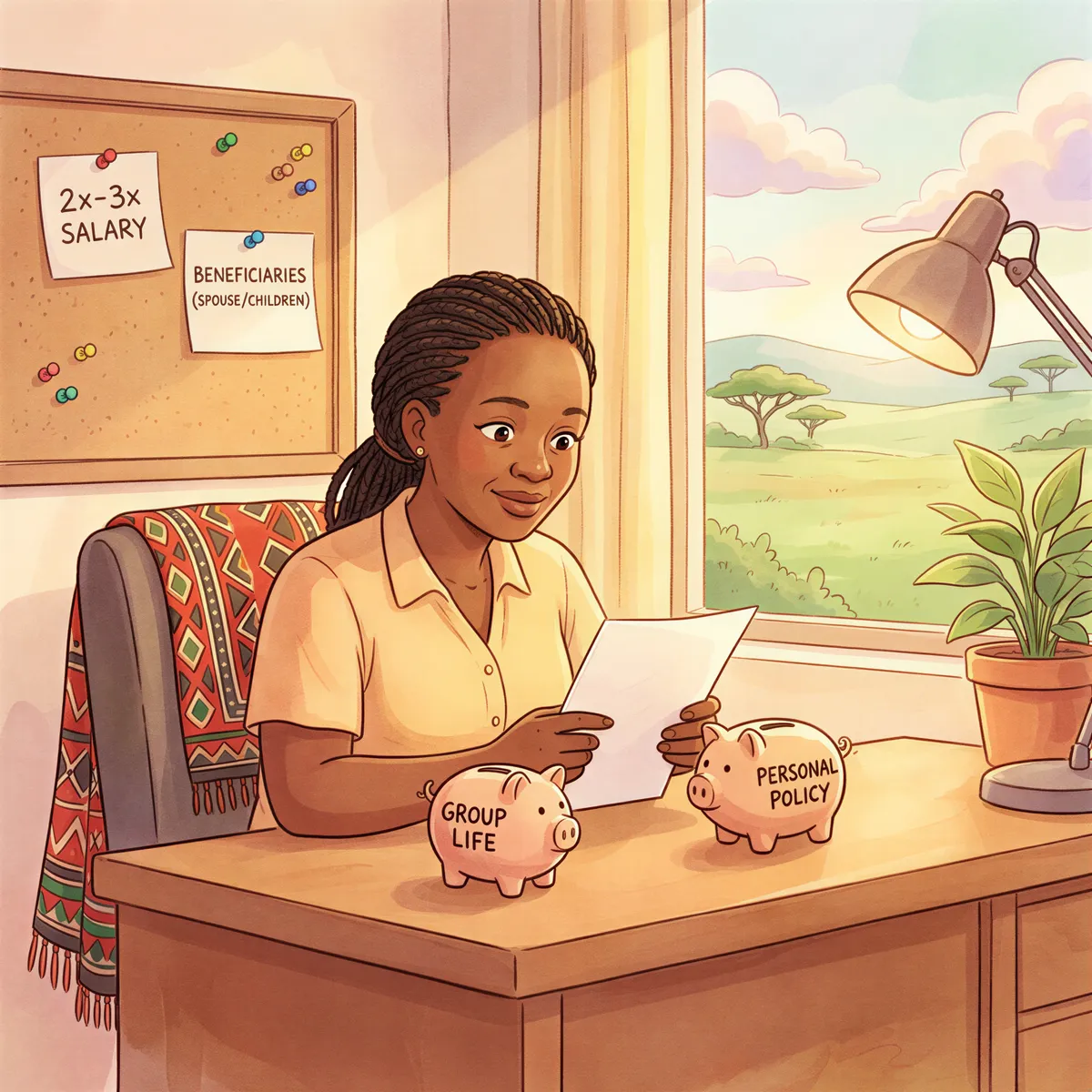
But group life cover usually pays 2x to 3x your annual salary. For someone earning KSh 80,000/month, that's roughly KSh 2 million to KSh 3 million.
Sounds like a lot until you do the math.
KSh 3 million divided by KSh 80,000 per month = 37 months. About three years.
After that? Your family is on their own.
Also:
- Group cover ends when you leave the company
- You don't control the beneficiary naming
- The payout amount is fixed — it doesn't grow with your responsibilities
A personal policy fills those gaps.
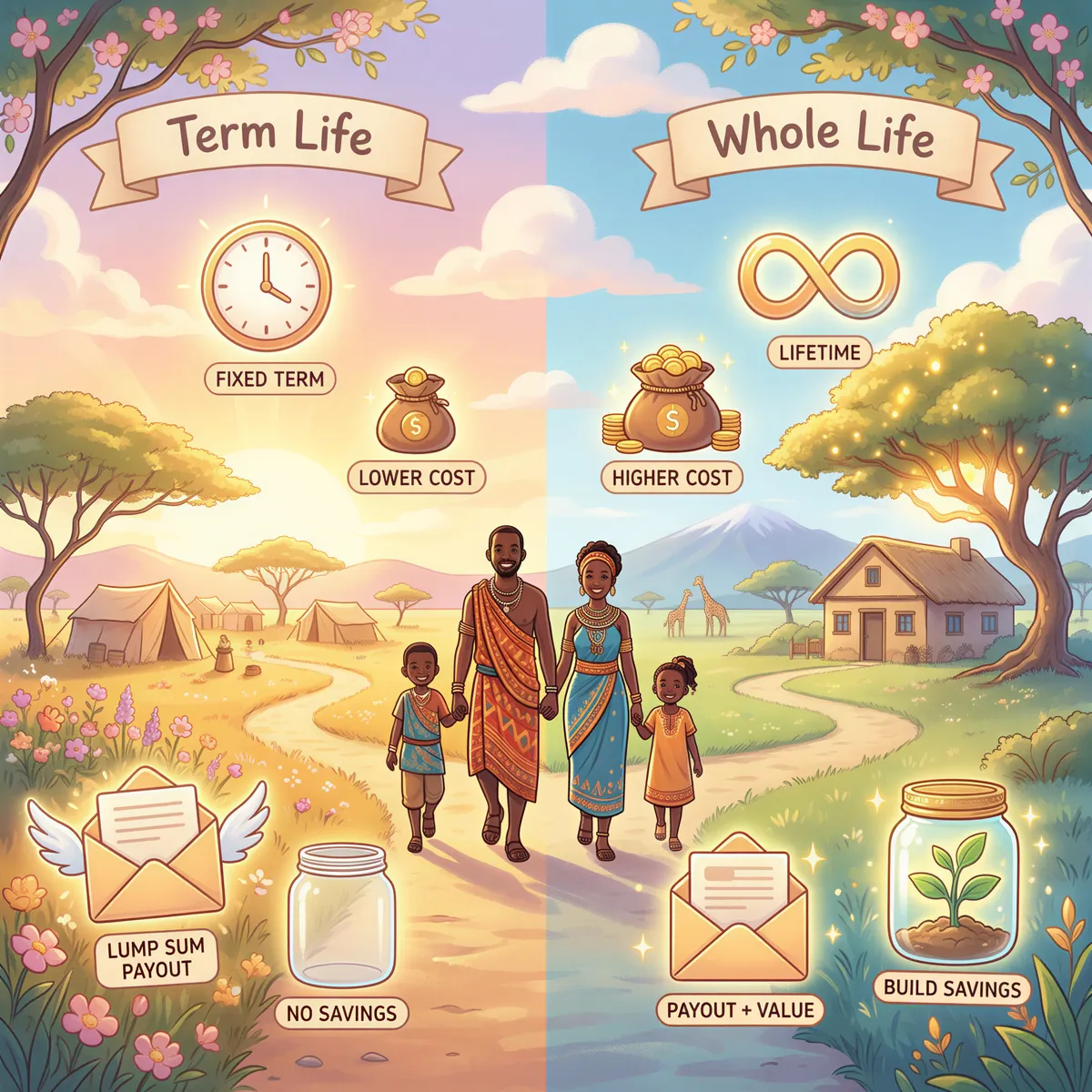
Term Life vs Whole Life: A Quick Snapshot
Not all life insurance is the same. Here's the basic split:
| Feature | Term Life | Whole Life |
|---|---|---|
| Duration | Fixed period (10, 20, 30 years) | Covers you for life |
| Cost | Lower premiums | Higher premiums |
| Payout | Only if you die during the term | Guaranteed payout eventually |
| Savings component | No | Yes (cash value builds up) |
| Best for | Young families on a budget | Long-term wealth planning |
Most young Kenyan families should start with term life insurance. It's affordable and covers the most critical years — when your kids are young and your debts are high.
If you want something that also builds cash value over time, look at whole life insurance.
How Much Life Insurance Do You Actually Need?
Here's a simple formula:
Annual expenses x number of years your family needs support + outstanding debts + education fund
Example:
- Annual family expenses: KSh 960,000
- Years of support needed: 10
- Outstanding mortgage: KSh 2,000,000
- Education fund: KSh 3,000,000
Total: KSh 14,600,000
That's your target cover amount. Round up. Your family will thank you.
Why Kenyans Avoid Life Insurance (And Why They Shouldn't)
Let's be honest about the objections:
❌ "It's too expensive"
A term life policy for KSh 5 million can cost as little as KSh 3,000–5,000 per month. That's less than what many people spend on data bundles.
❌ "I'm still young"
Young is actually the best time to buy. Premiums are lowest when you're healthy and under 35. Wait until you have a condition, and it gets expensive — or impossible.
❌ "God will provide"
Faith is powerful. But faith and planning are not enemies. Even Joseph stored grain before the famine.
❌ "I don't trust insurance companies"
This is fair. The industry has trust issues. But regulated Kenyan insurers do pay out. The key is reading your policy, naming your beneficiaries properly, and keeping premiums current.
Final Word
Medical cover handles your hospital bills. Funeral cover handles your burial. But neither one answers the question your family will face the morning after:
"How do we live now?"
That's the question life insurance answers. Quietly. Completely. Without drama.
If you haven't thought about it yet, today is a good day to start.
🟢 Ready to understand your options? Start with our Life Insurance Basics guide or compare Term Life and Whole Life policies to find what fits your family.
Ready to Get Started?
Get personalized advice and quotes tailored to your needs. No pressure, just honest guidance.
👉 Or start a chat with our assistant now.