Insuring a House You Are Building in Kenya

The plot is bought. The foundation went in last year. Your cousin sends photos every few weeks and the walls are up now, and every shilling in it came from a salary earned somewhere cold.
Then someone asks whether it is insured, and you realise you assumed it was.
Here is the part that catches most people out: the cover you eventually want on that house is not the cover you need while it is being built. They are two different policies, and the gap between them is where the losses happen.
Table of Contents
- A Building Site Is Not a Home
- Contractors' All Risks Covers the Build
- Whose Policy Is It, Exactly?
- The Handover Is the Dangerous Moment
- Insure the Rebuild Cost, Not the Photos
- Then There Is 2027
- The Bottom Line
- Next Steps
A Building Site Is Not a Home
The policy people know about is the domestic package: the one that covers a house and the things in it against fire, theft, storm and so on.
It assumes a finished, occupied home. That is what it is priced for.
A half-built structure is a different risk entirely. It is open. Materials are stacked on site and easy to move. People come and go all day. There is no lockable front door yet, and often no one there at night. An insurer looking at that does not see a home, and the domestic package is not the product for it.
Contractors' All Risks Covers the Build
The cover written for this stage is Contractors' All Risks, usually shortened to CAR.
It runs for the construction period and typically covers:
- Damage to the works themselves, finished or in progress
- Materials on site waiting to be used
- Plant and equipment being used to build
- Liability for injury or damage caused to other people during the works
That last one is easy to skip past and worth pausing on. If a wall comes down onto a neighbour's property, or a passer-by is hurt at your site, the claim goes to whoever is legally responsible. Which brings up the question most people never ask.
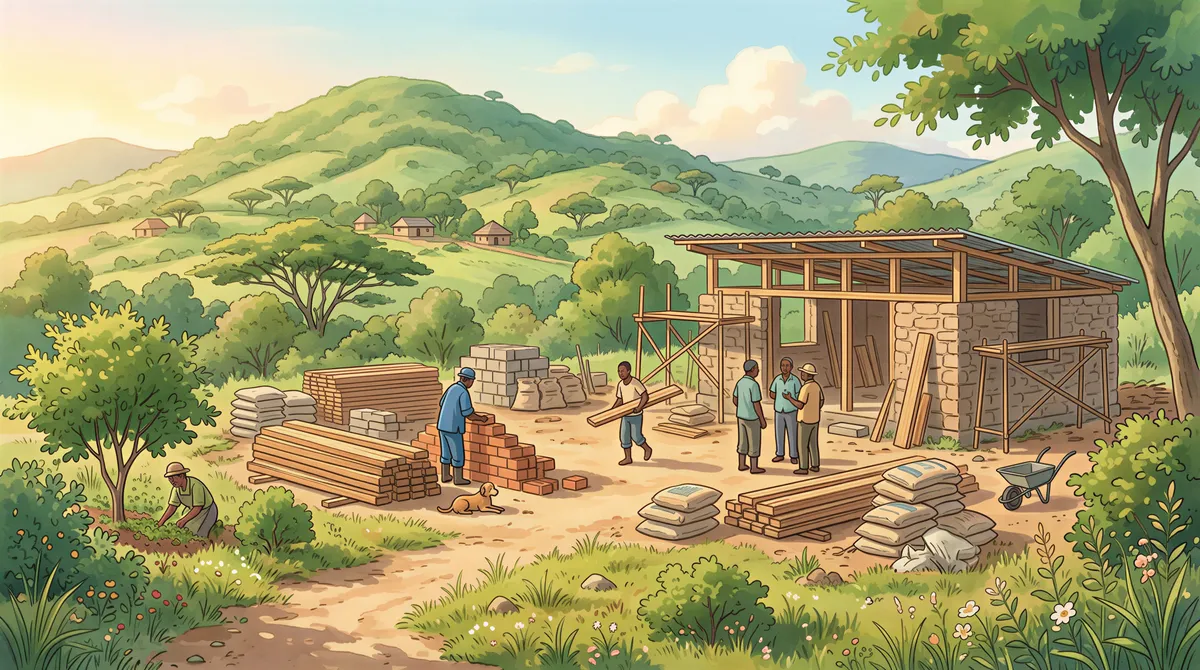
Whose Policy Is It, Exactly?
Ask your contractor whether they hold CAR, and if so, who the insured party is and what the sum insured is.
Contractors often carry a policy. What that policy covers is frequently their own equipment and their own liability, not the full value of your building. If their cover is sized for their tools and yours is nonexistent, the structure itself is uninsured and everyone assumed someone else had it.
Get it in writing. Ask to see the certificate rather than taking a yes over the phone. If you are running the build directly and paying artisans yourself, then there is no contractor policy, and the cover has to be yours.
For someone abroad this is the highest-value ten minutes of the whole project, because you are relying entirely on other people's accounts of what exists.
The Handover Is the Dangerous Moment
CAR ends when the works are complete. The domestic package starts when the home is a home.
Between the two sits a period nobody plans for: the building is finished, nobody has moved in yet, and it may sit like that for months or years while you are still abroad. Cover often lapses here simply because the build is over and the next policy has not been arranged.
Two things to sort out before that moment arrives:
- Arrange the permanent cover as completion approaches, not after. Put a date in your calendar tied to the build, not to your next trip home.
- Tell the insurer the truth about occupancy. An unoccupied property is a different risk and most policies treat it differently. A house you describe as occupied, that is actually empty for eleven months of the year, is a claim waiting to be argued about.
If the plan is to let it out, say so. Rental property has its own considerations and the honest version is always cheaper than the discovered version.

Insure the Rebuild Cost, Not the Photos
The most expensive mistake in property insurance has nothing to do with which policy you pick.
Insure the building for what it would cost to rebuild it, not what you have spent so far and not what you think the plot plus house would sell for. Rebuild cost is its own number.
If the sum insured is too low, the average clause applies. In plain terms: insure for half of what it would cost to rebuild, and a partial claim can be settled at roughly half of what you lost. You do not discover this when you buy the policy. You discover it when you claim.
Building from abroad makes this worse in one specific way. Costs move while you are away, and the figure you set at foundation stage can be badly out of date by the time the roof is on. Revisit the sum insured at completion, and again periodically.
Then There Is 2027
Kenya's next general election falls in August 2027, and standard property policies exclude political violence and terrorism outright. The riot extension most people carry does not close that gap.
Whether that exposure is worth insuring depends on where the property sits and what it is. What is not sensible is deciding in the month everybody else decides, because that is when terms tighten and capacity gets scarce.
If your building is anywhere near a route that gatherings use, ask for an indication early. Asking commits you to nothing. We covered how this cover works, and where riot cover stops, in Political Violence and Terrorism Cover in Kenya.
The Bottom Line
| Stage | Right cover | Common failure |
|---|---|---|
| Under construction | Contractors' All Risks | Assuming the contractor's policy covers your structure |
| Finished, empty | Domestic package, occupancy declared | Cover lapses at handover |
| Occupied or let | Domestic package, or landlord cover | Describing a let property as owner-occupied |
| Any stage, election year | PVT considered separately | Asking once it is already in the news |
Next Steps
- Ask your contractor for their CAR certificate, and check who the insured party is.
- Work out the rebuild cost rather than reusing your spend to date.
- Diarise the permanent cover against build completion, not your next visit.
- Be straight about occupancy from the start.
- Read: Property Insurance in Kenya: What It Actually Covers
- Read: Insurance for Kenyans Abroad
Ready to Get Started?
Get personalized advice and quotes tailored to your needs. No pressure, just honest guidance.
👉 Or start a chat with our assistant now.