Life Insurance in Kenya: 4 Real Stories
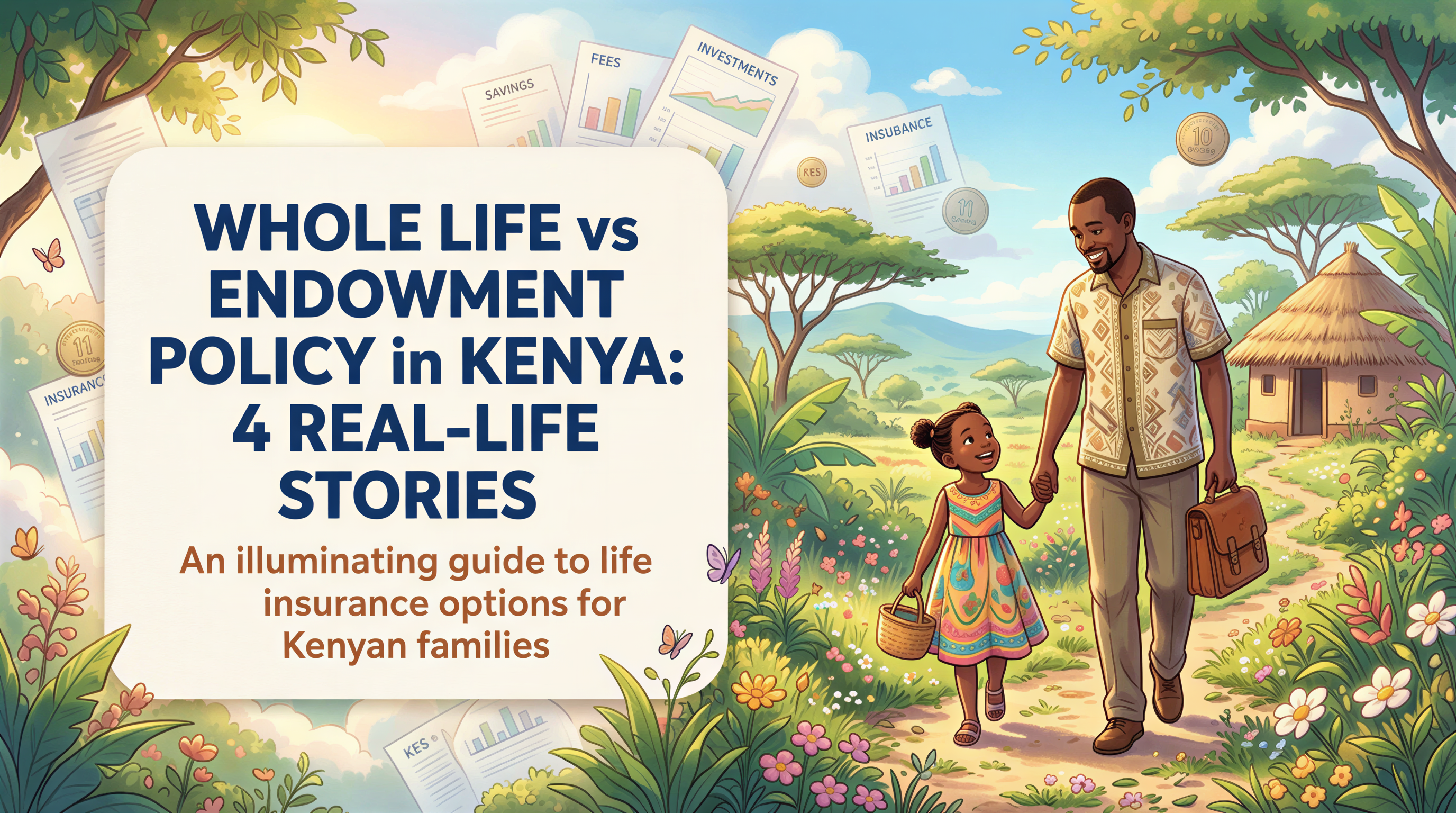
"Daddy, pinky promise?"
Ben's six-year-old stretched out her tiny finger. "When I finish university… you'll be there, right?"
He hooked his finger around hers. "Pinky promise."
Kids make promises easily. Adults know life doesn't always cooperate.
Ben isn't a rich man. He's a reliable one — the kind of dad whose salary quietly holds everything together. School fees. The mortgage. Food in the fridge. The lights staying on. Then a colleague died at 42. "He was here yesterday," everyone kept saying. And Ben started asking the question most of us avoid: if I'm gone tomorrow, does the promise survive?
This is about four Kenyans who asked that question — and the two policies that kept showing up in their answers: whole life and endowment. Same family of products, completely different jobs. Here's the difference, in plain language, through their stories.
Table of Contents
- The 2-Minute Version: Whole Life vs Endowment
- Story 1: Ben — The Reliable Dad
- Story 2: Angela — The Single Mum Who Built Everything
- Story 3: Peter — The Policy That Matured the Month He Lost His Job
- Story 4: Rob — Single, No Kids, and Why He Still Got Cover
- So Which One Do You Actually Need?
- How to Start
The 2-Minute Version: Whole Life vs Endowment
Before the stories, the cheat sheet. Two policies people constantly mix up:
- Whole life pays a lump sum to your family when you die — and it covers you for life. It's protection. It exists for the people who depend on your income.
- Endowment is a savings policy with a deadline. You pay for a set number of years; at the end, it pays you a lump sum. Die before then, and your family still gets paid. It's protection plus savings.
One protects the people you'd leave behind. One builds a pot of money for a future you're planning to be alive for.
And here's the thing almost nobody tells you: you don't have to pick one. Every person in these four stories ran both.
Story 1: Ben — The Reliable Dad
Back to Ben.
After his colleague died, he sat his wife down. "If something happened to me, would the children still finish school? Would you manage the mortgage? Would you have time to grieve without immediately worrying about money?"
Neither of them had an answer. That silence changed everything.
So Ben took two policies.
A whole life policy — not because he expected to leave anytime soon, but because if life had other plans, he wanted the people he loved to have financial support while they rebuilt.
And an endowment policy — because he still planned to keep that pinky promise. He wanted to be there when his daughter graduated. To retire with dignity. To travel with his wife once the kids were grown. If life gave him those years, the endowment would hand him a lump sum to actually enjoy them.
His daughter still asks him for pinky promises. She has no idea one of the biggest promises he ever made wasn't with his little finger — it was in the financial decisions he made afterwards.
The lesson: whole life protects the promise. Endowment funds the future where you get to keep it.

Story 2: Angela — The Single Mum Who Built Everything
Angela didn't inherit wealth. She built it. First business failed. Second barely survived. The third one changed her life.
For the first time, she could give her daughter the childhood she'd dreamed of. A good home. A great school. Dance class every Saturday. Every win whispered the same sentence: "My daughter will never struggle the way I did."
Then one evening her daughter said, "I just want us to always live together." Angela smiled — and her heart sank. Because children don't know some promises are beyond our control.
She met her financial adviser. She wasn't worried about dying. She was worried about everything her daughter would lose if she did — not just a mother, but the home, the school, the whole life she'd spent years creating.
So Angela made two moves. A whole life policy, so her daughter would have financial support and enough time to grieve without watching her world collapse overnight. And an endowment policy, because she fully expected to watch her girl finish school, graduate, maybe even make her a grandmother — and wanted a lump sum to help with university or a first business when that day came.
She wasn't planning for death. She was planning for life. All of it.
The lesson: building a good life for your child is one achievement. Making sure it doesn't disappear overnight if you're gone is a different one — and that's what the cover bought her.

Story 3: Peter — The Policy That Matured the Month He Lost His Job
Peter walked in at 2:30 p.m. His wife Grace knew instantly. "You never come home this early." He put an envelope on the table. "I've been laid off."
The numbers on their dining table hadn't changed — rent, school fees, groceries, electricity, fuel. Their income had.
But they didn't panic. Years earlier they'd promised each other they'd always prepare for the unexpected. So Peter had taken a whole life policy and a five-year endowment policy. People asked why he was locking away money when there were so many other needs. He'd just smile: "I'm buying peace of mind."
The timing was almost unbelievable. The same month Peter lost his job, his five-year endowment matured. A lump sum landed in his account.
For the first time since the redundancy letter, he smiled. Not because losing his job didn't hurt — it did. But because he had something most people don't when life suddenly changes: time. Time to look for the right job instead of grabbing the first offer out of desperation. Time to finally explore that business idea. Time to keep paying the bills without turning his family's life upside down.
The kids never changed schools. The landlord never came knocking.
The lesson: an endowment isn't only a retirement plan. It can be the financial cushion that gives you breathing room when life catches you by surprise.

Story 4: Rob — Single, No Kids, and Why He Still Got Cover
Rob is 35. Works in tech. Travels when he wants, eats out, buys the latest gadget. No one asking him for school fees. His friends joke, "You've got no responsibilities." He used to agree.
Until one ordinary Tuesday. A headache. Then dizziness. Then a hospital. The doctor reassured him — "It isn't life-threatening" — then added the part that mattered: "But you'll need treatment, regular reviews, and you shouldn't be working for a while."
For the first time in his adult life, Rob wasn't worried about dying. He was worried about living. Living without an income. Living while rent still needed paying and hospital bills kept arriving and his savings slowly disappeared. Nobody was coming to rescue him — not because people didn't love him, but because this was his life, his responsibility.
After he recovered, he changed how he saw money. He realised the biggest financial risk in his life wasn't death. It was losing his ability to earn.
So he took a critical illness policy — so one diagnosis could never again wipe out everything he'd built. And he started an endowment policy — because one day he wanted the freedom to stop working because he wanted to, not because his body forced him to.
He still travels. Still buys the gadgets. The difference? He's no longer spending only for the Rob who exists today. He's also investing in the Rob who'll exist 30 years from now.
The lesson: not everyone is planning for a family. Some people are planning for themselves — and that's just as important. If your income is your everything, protecting it isn't optional.

So Which One Do You Actually Need?
Short version — match your situation to the starting point:
| Your situation | Start with |
|---|---|
| People depend on your income (kids, spouse, parents) | Whole life — they're protected if you're gone |
| You want a future lump sum (university, retirement, a business) | Endowment — forced savings with a payout date |
| Your biggest fear is illness stopping your income | Critical illness cover |
| You're single with no dependants | Critical illness + endowment — protect your earning power, invest in future-you |
| You just want a quick payout for funeral costs | Last expense cover — a separate, simpler product |
Most real plans aren't one box. They're a mix — exactly like Ben, Angela, Peter and Rob.
How to Start
Here's the honest part: the right mix depends on your age, your dependants, your income and your goals — not on a blog post. The same KES you spend could buy very different protection depending on how it's structured.
That's literally my job. Tap Get a Quote / Consultation at the top of this page and I'll build a plan around your actual life — no jargon, no pressure.
Want to read up first? Get the technical breakdown in whole life vs endowment, explained, start with the whole life insurance guide, compare it with term life, and see which riders are actually worth paying for.
Because love isn't only about being there while you're alive. Sometimes it's about planning for every future — even the one you hope never comes.

Ready to Get Started?
Get personalized advice and quotes tailored to your needs. No pressure, just honest guidance.
👉 Or start a chat with our assistant now.